Low Fade with Curly Hair: Best Styles for Every Curl Type
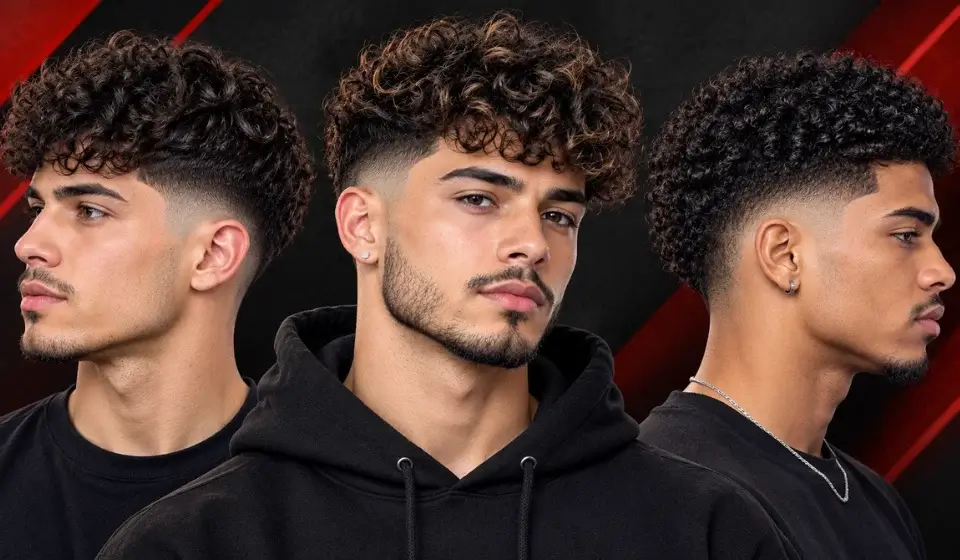
A low fade with curly hair. That much is easy. The harder part is getting the guard number and top length right for your specific curl pattern. Curls behave differently than straight hair under clippers, and what works for loose waves can look uneven on tight coils.
This guide breaks the low fade down by curl type. You will find guard numbers, top styles, and product tips for wavy hair, curly hair, and coily hair. If you want to know exactly what to ask your barber for your curl pattern, this is the guide for you.
We will use the standard curl chart most stylists use, from 2A (loose waves) through 4C (tight coils). You do not need to know your exact number before reading. By the end, you will be able to spot roughly where your hair sits on that scale.
Why Curl Pattern Changes How a Low Fade Should Be Cut
Curly hair shrinks. A curl that looks like an inch of length can measure two or three inches when stretched out straight. This is called shrinkage, and it matters a lot when you are picking a guard size.
If a barber cuts curly hair with the same guard they would use on straight hair, the curls spring back shorter than expected. The result can look patchy or uneven, especially at the point where the fade meets the top.
The fix is simple: leave more length on top for tighter curl patterns. The tighter the curl, the more shrinkage happens, and the more guard length you need to bank on top to end up with the look you actually want.
As a rough guide, loose waves shrink very little, maybe a fraction of an inch. Tight coils can shrink by half their stretched length or more. That gap is why a single “guard 4 on top” recommendation, applied to every curl type, causes so many disappointing haircuts.
Low Fade for Wavy Hair (Type 2A to 2C)
Wavy hair has the loosest pattern, closer to straight hair than true curls. It shows the least shrinkage, so a low fade here behaves close to a low fade on straight hair.
A guard of 3 to 4 on top usually works well for 2A and 2B waves. For thicker 2C waves, a guard of 5 gives the waves more room to show their shape.
Best Styles
A low fade with a slick back suits wavy hair nicely, since the waves hold their pattern well under light pomade. A low fade with a textured top also works, giving the waves a bit of natural movement without much daily styling.
Low Fade for Curly Hair (Type 3A to 3C)
This is the classic “curly hair” range, and it covers a wide range of curl sizes.
3A curls are loose, springy ringlets. A guard of 4 to 5 on top keeps enough length for the curls to form fully.
3B curls are tighter and springier. A guard of 5 to 6 gives the curls room to bounce without looking sparse after they shrink.
3C curls are tight, corkscrew curls, close to coily. A guard of 6 to 7 on top is a safer starting point, since 3C curls shrink the most out of this group.
Best Styles
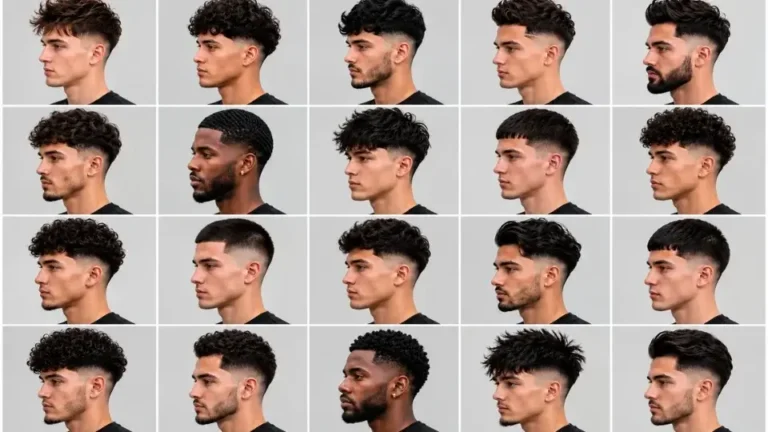
A curly top low fade is the simplest option: just let the curls sit naturally on top, faded low on the sides. A curly fringe with a low fade brings the curls forward over the forehead for a softer look. For a bit of edge, a curly low fade mullet keeps the sides tight while letting curls grow longer at the back.
If you want a messy, lived-in look, ask for a messy curly hair low fade. The barber trims the shape, but the curls are left loose and untouched by heavy product.
Low Fade for Coily and Afro-Textured Hair (Type 4A to 4C)
This range has the tightest curl pattern and the most shrinkage. A length that looks short right after the cut can look much shorter once the curls fully spring back over the next day or two.
A guard of 7 to 8 on top is a common starting point for 4A and 4B hair. For 4C hair, some men go even longer on top, since the tightest coils shrink the most of any curl type.
Best Styles
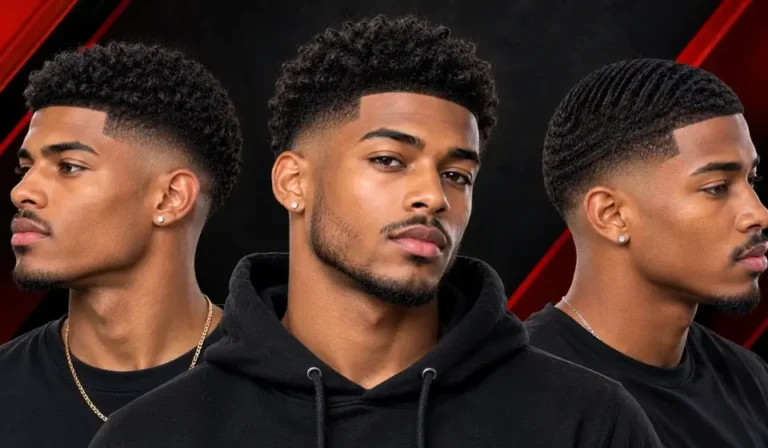
An afro low fade keeps the top rounded and full, with the fade doing the work of keeping the sides clean and structured. A twist-out low fade combines twisted sections on top with a sharp faded base, giving definition without needing daily styling. For something bolder, a low fade with a mohawk uses the coily texture to build height down the center of the head.
Best Low Fade Styles for Curly Hair, at a Glance
A few styles work well across more than one curl type, depending on how much length you keep on top.
- Long curly hair with a low fade. Keeping real length on top, rather than a short guard, creates strong contrast against the faded sides. This works especially well for 3B to 4A curls.
- Curly hair with a beard fade. Blending a beard into a low fade gives curly-haired men a clean, framed look. Ask your barber to fade the sideburns into the beard using the same technique as the low fade.
- Undercut with curly hair. A hard part or disconnected undercut, paired with a low fade, gives sharper contrast than a blended fade alone. This suits 3A to 3C curls especially well.
- French crop with curly hair. A short, textured fringe on top, with curls left slightly longer than a typical French crop, softens the usual sharp edges of this style.
- Curly hair blowout with a low fade. Blow-drying curls upward and outward, then fading the sides low, creates a bold, high-volume look. This works best on 3B to 3C curls with enough density to hold the shape.
Low Fade with Curly Hair Across Different Backgrounds
Curl patterns vary widely within any group of people, but a few style notes come up often.
For Black men with curly or coily hair, a low fade is often paired with a rounded afro, a twist-out, or a taper. These styles keep the crown fuller than the sides. Barbers who work often with 3C to 4C hair usually leave extra length on top by default. It is still worth confirming the guard number rather than assuming.
For Hispanic and Latino men with curly hair, a low fade con rizos (low fade with curls) is a common request. It is often paired with a line-up or a fade con diseño for extra detail. The same guard-by-curl-type approach from this guide still applies, no matter which style name your shop uses.
In both cases, the core advice stays the same: match the guard to the curl pattern, not to a generic style name.
Finding a Barber Who Understands Curly and Textured Hair
Not every barber cuts curly hair the same way. A few things to look for before you book:
- Portfolio photos that actually show curly or coily clients, not just straight-hair fades
- A barber who asks about shrinkage or curl type before cutting, rather than guessing
- Willingness to cut curls dry, or check the length again once hair dries, since wet curls stretch out and can mislead the cut
A shop that regularly works with curly and textured hair will usually have this conversation with you before the clippers come out.
How to Ask Your Barber for a Curly Low Fade
Curly hair needs a slightly different conversation with your barber than straight hair does. Use these points.
- Say your curl type if you know it, such as “3B” or “4A.” This gives your barber a quick reference for shrinkage.
- Ask them to leave extra length on top to account for shrinkage, rather than cutting to a guard number that assumes straight hair.
- Mention if you want your curls left natural, or blown out and styled, since this changes how short the barber can safely go.
- Ask for the fade itself to start low, near the ear, just as you would for any low fade.
- Bring a photo of the curl length and shape you want. This matters even more with curly hair, since the “same” guard number can look different depending on curl pattern.
Styling Products and Routine for a Curly Low Fade
Curly hair on top needs different care than straight hair, even with the same fade underneath.
Curl cream or gel. Apply to damp hair right after washing. This helps define curl pattern and reduces frizz as the hair dries.
Diffusing. Drying curls with a diffuser attachment, on low heat, keeps the curl pattern intact. Regular blow-drying without one can loosen curls and cause frizz.
Refresh days. Curly hair does not need daily washing. A light water spray, plus a small amount of curl cream, can refresh the style between wash days.
Sleep protection. A silk or satin pillowcase, or a loose bonnet, reduces friction on curls overnight. This keeps the curl pattern looking fresh for longer between styling sessions.
Avoid daily brushing. Brushing curly hair when dry breaks up the curl pattern and adds frizz. Use fingers or a wide-tooth comb on wet, product-coated hair instead.
Common Mistakes with Curly Hair and a Low Fade
A few mistakes come up again and again with curly low fades.
Cutting too short on top. Not accounting for shrinkage is the single biggest mistake. What looks right in the chair can look too short once the curls settle over the next day.
Using the wrong guard for the curl type. A guard that works for 3A curls will leave 4C curls looking much shorter than planned. Always match the guard to your actual curl type, not a general “curly hair” guess.
Skipping curl-specific products. Standard pomade or wax can weigh down curls and flatten their shape. Curl cream, gel, or a lightweight mousse keeps the top looking full instead of flat.
Letting the fade grow out unevenly. Curly hair can hide fade regrowth for longer than straight hair, which sometimes means the fade line gets skipped for too long. Stick to a regular touch-up schedule even if the sides do not look obviously grown out yet.
Cutting curls when they are stretched wet. Wet curls hang longer than dry ones. A cut that looks right while soaking wet can look much shorter once the hair dries and springs back. Ask your barber to check the length dry before finishing up.
Frequently Asked Questions
The following are the FAQs:
Q1. What low fade works best for curly hair?
There is no single answer, since it depends on your curl type. Looser curls, like 3A, work well with a shorter guard around 4 to 5. Tighter curls, like 3C or 4C, need more length on top, often a guard of 6 to 8, to allow for shrinkage.
Q2. Is a low fade good for curly hair?
Yes. A low fade suits curly hair well, since it keeps the sides clean and lets the natural curl pattern stand out on top. The key is choosing the right guard length for your specific curl type.
Q3. How much length should I leave on top for curly hair?
As a starting point, use a guard of 4 to 5 for loose curls, 5 to 6 for medium curls, and 7 to 8 for tight coils. Your barber can adjust from there based on how your hair actually shrinks once it dries.
Q4. Do I need special products for a curly low fade?
Yes, in most cases. Curl cream, gel, or a lightweight mousse work better than standard pomade for keeping curls defined instead of flat. Diffusing on low heat also helps hold the curl pattern.
Q5. Can tight coils get a low fade?
Yes. 4A, 4B, and 4C hair all work well with a low fade. The fade itself is cut the same way as any other low fade. The main difference is leaving extra length on top to account for how much tight coils shrink after cutting.
Q6. How often should I get a touch-up with curly hair and a low fade?
Every 2 to 3 weeks is a good default, similar to a low fade on straight hair. Since curly hair can hide regrowth better than straight hair, set a reminder rather than waiting until the fade visibly grows out.
Final Thoughts
A low fade works on every curl type, from loose 2A waves to tight 4C coils. The difference between a great result and a disappointing one usually comes down to guard length and shrinkage, not the fade itself. Tell your barber your curl type, ask for extra length on top if your curls are tight, and use curl-specific products to keep the top looking full. Get those details right, and a low fade becomes one of the easiest ways to show off natural curls with a clean, sharp base underneath.