High Fade vs Low Fade: Which One Is Right for You?
“High fade vs low fade” is one of the most searched haircut comparisons, since both cuts shorten hair from longer on top to skin on the sides—but where the fade starts changes the look completely. Get that wrong with your barber, and you can end up with a totally different cut than you wanted. This guide breaks down the real difference, which suits your hair type and face shape, and how to ask for exactly what you want.
What Is a High Fade?
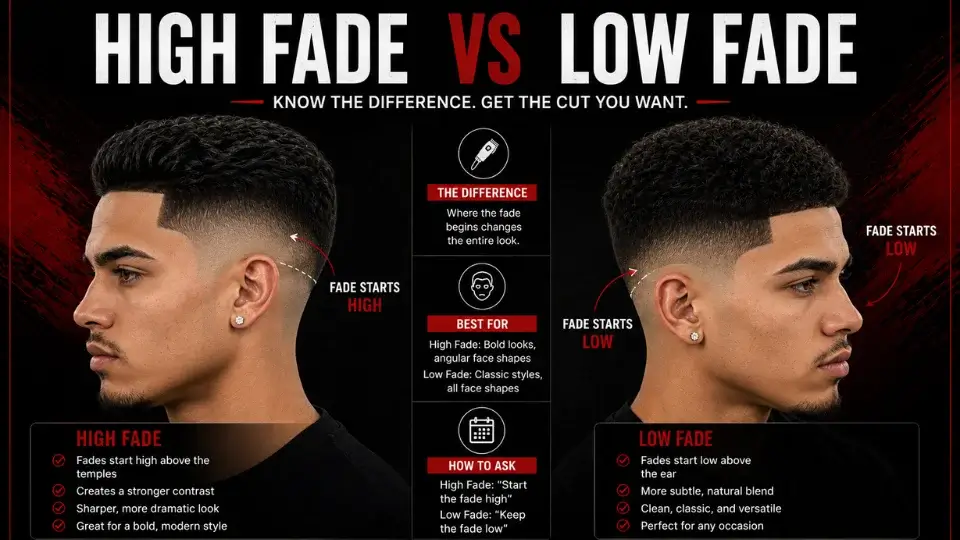
A high fade starts blending hair length very close to the crown, well above the temple, and then fades sharply down from there. Because the fade begins so high, more length is removed overall, which creates a bold, high-contrast look between the top and the sides. High fades pair naturally with an undercut, a slicked-back style, or a pompadour, since there’s a clean, almost shaved zone for the longer top hair to contrast against.
What Is a Low Fade?
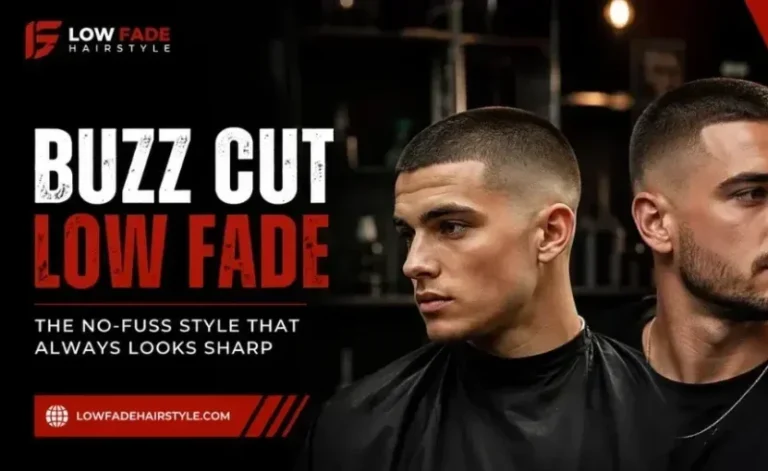
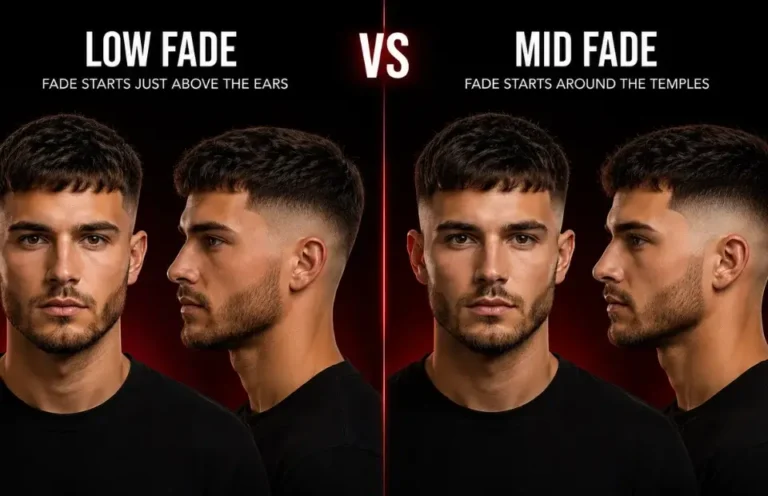
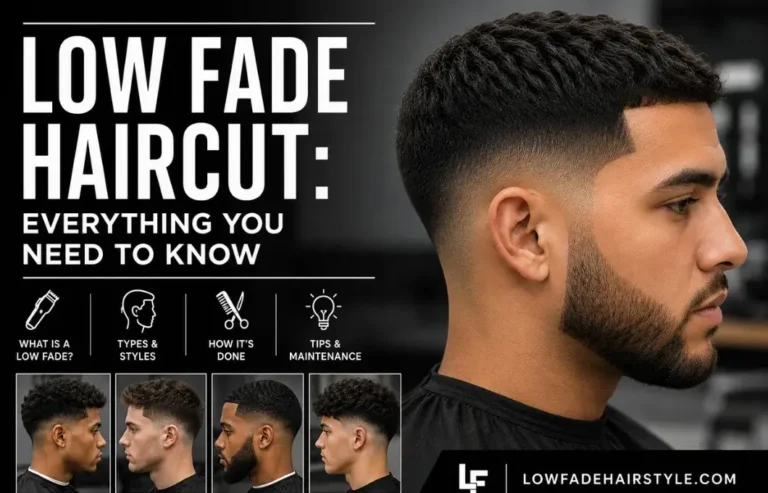
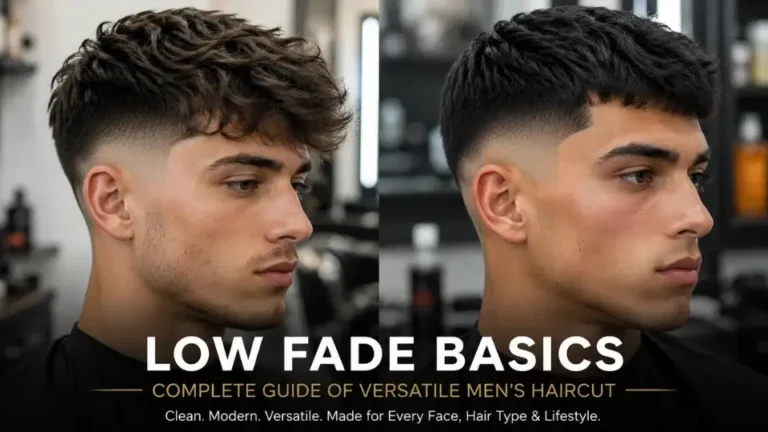
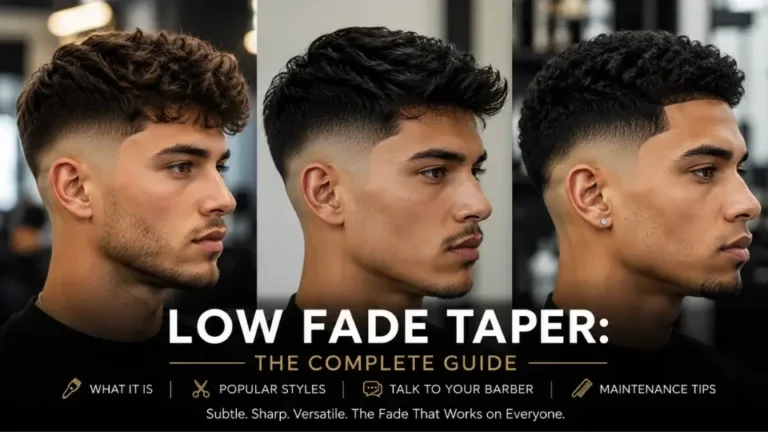
A low fade keeps the blending much closer to the hairline — usually starting just above the ears and around the lower back of the head. Far less length is removed overall, so a low fade tends to look subtler and more conservative from a distance, while still giving a clean, defined edge close to the skin. This is also where a lot of naming confusion comes in: a “low taper fade” and a “low skin fade” both fall under the low fade umbrella, but a taper blends more gradually while a true low fade (especially a low skin fade) creates a sharper contrast right near the hairline.
High Fade vs Low Fade: The Key Differences
High Fade |
Low Fade |
|
|---|---|---|
|
Where it starts |
Near the crown/temple |
Near the ears/hairline |
|
Hair removed |
More overall |
Less overall |
|
Hair removed |
High, bold |
Subtle to moderate |
|
Best for |
Bold, statement looks |
Everyday, versatile looks |
|
Grows out |
Needs touch-ups sooner |
More forgiving between cuts |
|
Pairs well with |
Undercut, pompadour, slick back |
Beard, curls, afro, waves |
If you remember one rule, remember this: the higher up the head the fade begins, the more dramatic and high-maintenance the cut tends to be. A low fade is the more forgiving, lower-commitment version of the same basic concept.
Which Hair Type Suits Each Cut?
Hair texture plays a bigger role in this decision than most people expect.
Curly, Coily, or 4c Hair
Generally looks better with a low fade. Because more length stays on the sides and the contrast is gentler, the natural curl pattern reads more clearly instead of getting visually “cut off” by a dramatic high-contrast line.
Straight or Fine Hair
can carry a high fade extremely well, since there’s less volume on top competing with the sharp, shaved sides — the contrast actually flatters straighter textures.
Thick, Dense Hair
Thick, dense hair of almost any texture tends to suit a high fade if you want a more streamlined, lower-volume silhouette, since more bulk is removed from the sides.
Thinning Hair
often looks fuller with a low fade, since a high fade can sometimes draw more attention to a thinning crown by creating such a sharp line beneath it.
Neither cut is strictly off-limits for any hair type—but if you’re choosing based on what’s lowest-effort and most flattering for textured Black hair specifically, the low fade tends to win out for everyday wear, while a high fade is a great option when you want something bolder for a special occasion or a style refresh.
High Fade vs Low Fade by Face Shape
Round Faces
often look more balanced with a high fade, since the added height and vertical contrast help elongate the face. A low fade can work too, but ask your barber to add more height on top to get a similar lengthening effect.
Oval Faces
are the most adaptable—both a high fade and a low fade tend to look proportionate, so this decision can come down to personal style rather than face shape.
Square Faces
generally pair well with a low fade, since the softer transition complements a strong jawline without adding too much extra contrast at the temples.
Long Faces
usually benefit from a low fade with more width preserved on the sides, since a high fade can make the face look even longer by removing volume at the temples.
Styling Options for Each
What a High Fade Pairs Well With
- Undercut combinations—a high-fade undercut is one of the most requested variations, giving maximum contrast between a long top and very short sides.
- Slick back or pompadour—the added height from a high fade gives extra structure for styles that rely on volume and a defined part.
- Man bun or longer top — a high fade keeps the sides controlled while letting longer hair on top do all the visual work.
What a Low Fade Pairs Well With
- Beards — a low fade connecting into a clean beard line creates one continuous shape from temple to chin.
- Curls, waves, and afro textures—since more length and curl pattern survive the cut, a low fade is the go-to choice for showing off natural texture.
- Everyday, low-effort looks — a low fade requires less daily styling to look intentional, which is part of why it’s such a popular default cut.
Maintenance: Which One Is More Work?
A high fade grows out faster in a visible way — the sharp line near the crown becomes noticeably softer within a couple of weeks, so most people return every 2–3 weeks to keep that crisp contrast. A low fade, by contrast, tends to grow out more gracefully since the transition point is lower and less dramatic to begin with, occasionally allowing you to stretch a little longer between visits without it looking obviously overdue.
If low-maintenance is your top priority, a low fade is generally the easier cut to live with day to day.
Cost Differences b/w a High Fade and a Low Fade
Pricing for both cuts usually falls within the same standard haircut range at most barbershops, since the base service — a fade with clippers — doesn’t change. That said, a couple of small cost factors can come into play:
- Time in the chair: A high fade often takes slightly longer to blend cleanly, since there’s more length to transition across a larger area of the head, which can occasionally mean a small premium at shops that price by time.
- Upkeep cost over a month: Because a high fade typically needs a touch-up every 2–3 weeks to stay sharp, the total cost over a few months can add up faster than a low fade, which often stretches a bit longer between visits.
- Add-ons: Both cuts can include the same optional extras — beard lining, a hard part, or a design — and those add-ons cost the same regardless of whether the base cut is high or low.
If budget and time between visits matter to you, the low fade’s slightly slower regrowth pattern can make a real difference over a year of haircuts, even if the price of a single visit is identical.
Naming Confusion Worth Clearing Up
A few terms get used almost interchangeably online, even though they technically describe different things:
- “Fade” vs. “taper”—a fade creates a sharp transition down to (or near) skin, while a taper blends more gradually without ever fully reaching skin.
- “High fade” vs. “high taper fade” — the taper version is softer and less dramatic, even though it starts at the same height on the head.
- “Skin fade” vs. “bald fade” — these two are essentially the same thing, just different regional or barber-preferred terminology for fading all the way to skin.
- “Low fade” vs. “low skin fade”—a low fade can stop at a guard number like a 1 or 2, while a low skin fade specifically goes all the way to bare skin at its lowest point.
Being specific about which of these you actually want — rather than relying on the umbrella term — is the single biggest factor in avoiding a miscommunication with your barber.
Don’t Forget the Mid Fade
A huge number of people comparing “high fade vs low fade” actually end up landing on a mid fade instead — a cut that starts around the temple, splitting the difference between the two. If a high fade feels too bold but a low fade feels too subtle, ask your barber specifically about a mid fade as a middle-ground option before committing to either extreme.
Quick Reference: Other Fade Types You’ll Hear About
- Skin fade — describes how close the fade gets to bare skin, and can apply to a high, mid, or low fade.
- Bald fade — essentially another term for a skin fade, fading all the way down to nothing.
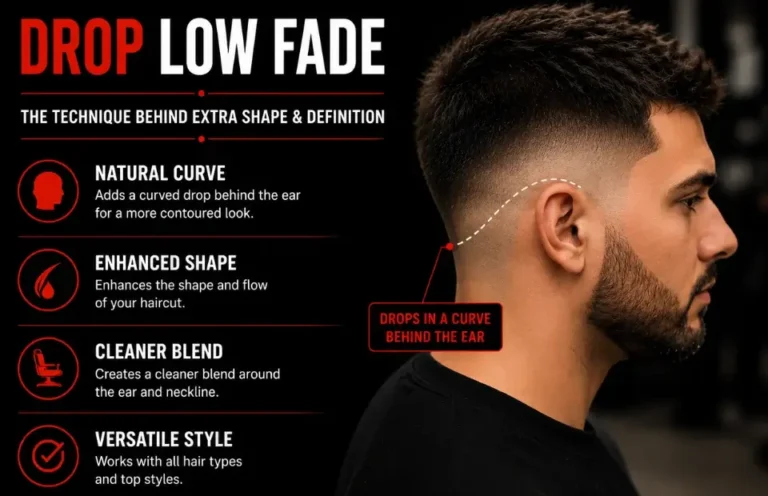
- Drop fade — curves downward behind the ear rather than running in a straight line, and can be layered onto either a high or low fade.
- Burst fade — fades in a rounded shape around the ear only, often used with longer hair on top.
- Taper fade — blends more gradually and subtly than a true fade, with less stark contrast at any point along the head.
Knowing these terms helps you communicate more precisely, since “I want a low fade” and “I want a low skin fade with a drop behind the ear” can produce noticeably different results from the same starting concept.
How to Decide: A Quick Checklist
Ask yourself these questions before your next barber visit:
- Do I want a bold, noticeable change or a subtle, everyday refresh? Bold → high fade. Subtle → low fade.
- How much time can I spend on touch-ups? Limited time → low fade. Don’t mind frequent visits → high fade works fine.
- What’s my hair texture? Curly/coily → low fade usually flatters more. Straight/fine → high fade can look just as sharp.
- What’s my face shape? Round or long → consider a high fade or extra height. Square → a low fade tends to soften things nicely.
- What am I pairing it with? Beard or natural texture → low fade. Undercut, pompadour, or slick back → high fade.
How to Ask Your Barber for the Right One
Instead of saying “high fade” or “low fade” and leaving the rest to interpretation, try describing the following:
- Where the fade should start (“at my temple,” “right above my ear”)
- How close to skin at its lowest point
- How much length to keep on top
- Any extras, like a beard connection or a part line
- A reference photo removes almost all of the remaining ambiguity, since the same words can produce very different cuts depending on hair density.
Frequently Asked Questions
What is the actual difference between a high fade and a low fade?
A high fade starts the blend much higher on the head, near the crown or temple, removing more hair overall and creating bolder contrast. A low fade starts near the hairline, removing less hair and giving a subtler, more versatile look.
Is a low fade or high fade better for round faces?
A high fade — or a low fade with extra height left on top — tends to elongate a round face better than a standard low fade with minimal height.
Can I switch from a high fade to a low fade?
Yes. Since a low fade removes less hair overall, your barber can simply let the existing fade grow out and re-cut it lower at your next visit — it’s a much easier transition than going the other way.
Which fade is more low maintenance?
A low fade is generally considered more forgiving between cuts, since the line where contrast is most visible sits lower and grows out less noticeably.
Is a mid fade a good compromise between high and low?
Yes—a mid fade starts around the temple and offers a middle ground in both contrast level and maintenance if neither extreme feels right.
Does hair type matter more than personal preference when choosing?
Personal preference always comes first, but hair type affects how flattering each option looks—curlier textures generally read better with a low fade, while straighter or thicker hair has more flexibility with either.
Final Verdict
There’s no universally “better” choice between a high fade and a low fade—it genuinely comes down to how bold a look you want, how much upkeep you’re willing to commit to, and how your specific hair texture and face shape respond to each style. If you want a striking, statement haircut and don’t mind regular barbershop visits, a high fade delivers maximum contrast. If you want something clean, versatile, and easier to maintain — especially with curly, coily, or naturally textured hair — a low fade is usually the smarter everyday choice. When in doubt, describe exactly where you want the fade to start and how close to the skin you want it, and let your barber guide you from there.