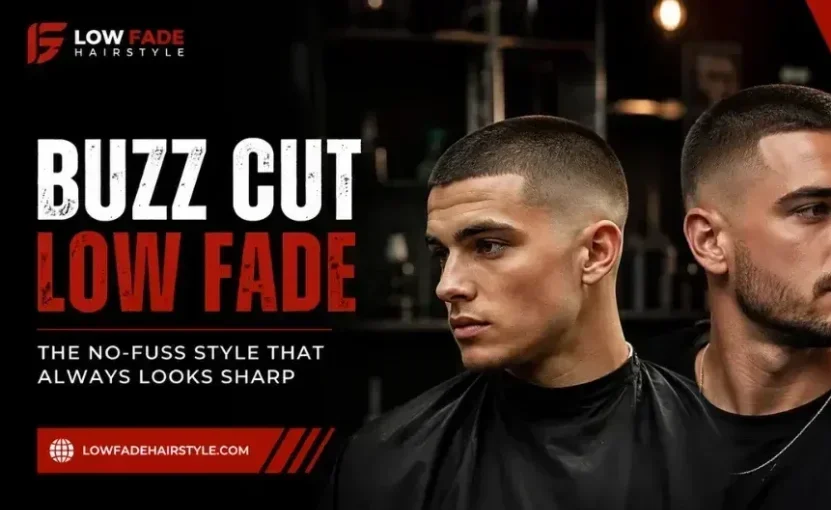
Buzz Cut Low Fade: The No-Fuss Style That Always Looks Sharp
Not every guy wants to spend ten minutes with products every morning. The buzz cut low fade exists for exactly that reason: uniform length on top, a clean fade down the sides, zero styling required, and it still looks deliberate rather than lazy. It’s become one of the most requested combinations in the chair because it solves a real problem—looking sharp without the daily effort a longer cut demands.
This guide breaks down the guard-length options, how the cut adapts to different hair types, who it tends to suit best, the add-ons worth knowing about, and how to keep it looking fresh between visits.
Buzz Cut Low Fade vs. a Standard Low Fade
A standard low fade usually keeps some length on top — enough to comb, texture, or style in some way. A buzz cut low fade removes that variable entirely: the top is cut to a single, even guard length, so there’s no styling decision to make each morning.
The trade-off is versatility. A longer low fade can be dressed up or down depending on the day; a buzz cut low fade looks essentially the same every day, which is either its biggest strength or its main limitation, depending on what you’re after. If you like the idea of a completely consistent, no-decisions haircut, that consistency is the entire point.
What Makes a Buzz Cut Low Fade Different
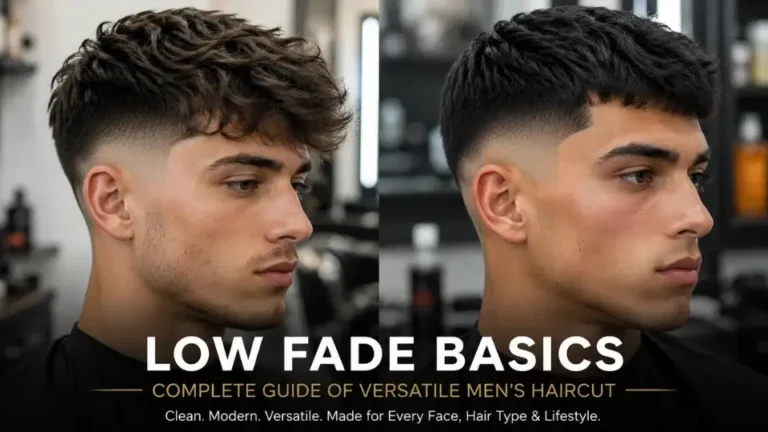
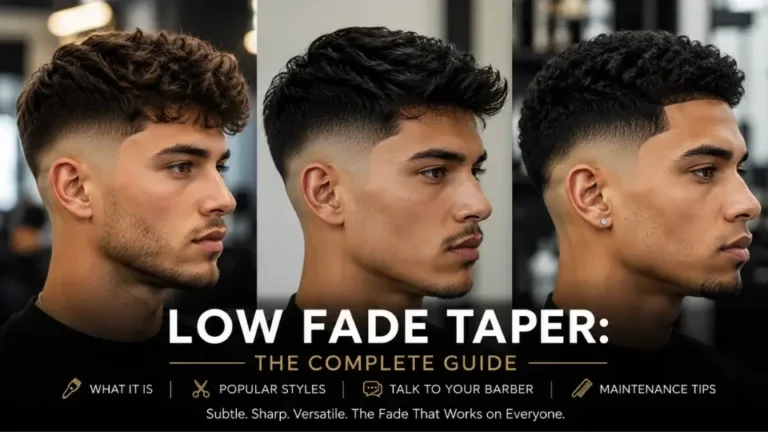
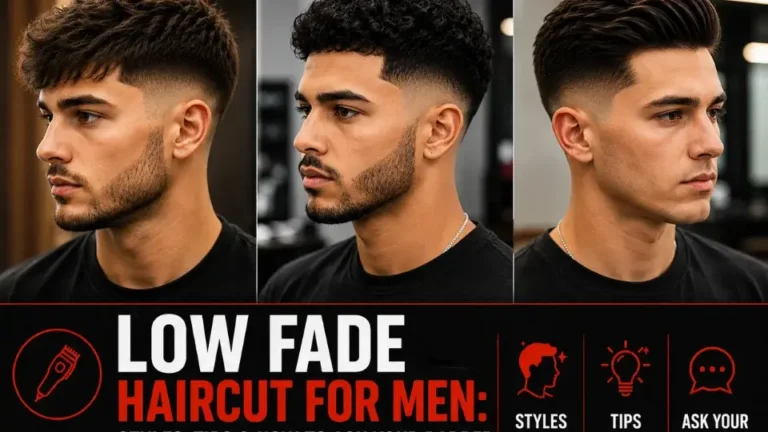
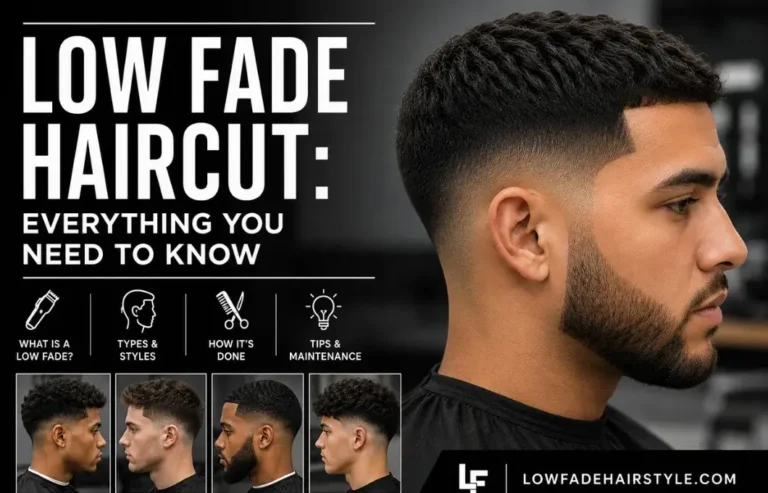
A standalone buzz cut is one uniform guard length all over the head. A buzz cut low fade takes that same short, even top and adds a gradual fade down the sides, starting just above the ears rather than at the temples. The result keeps the low-maintenance appeal of a buzz cut while adding shape and contrast that a flat, all-one-length buzz doesn’t.
It’s also different from a longer low fade with styled top hair—there’s no comb-over, no quiff, and no product-dependent shape. The top is short enough that it holds its own texture without any work, which is exactly why it’s popular with guys who want a wash-and-go routine.
Guard-by-Guard: Picking Your Buzz Cut Length
The guard number you choose for the top changes the whole feel of the cut. Because there’s no styling to fall back on, this single number does more work in a buzz cut low fade than in almost any other haircut — it’s the entire difference between a cut that looks intentional and one that looks like an accident. Here’s how each one typically reads:
Guard |
Look |
Best for |
|
3 guard buzz cut low fade |
Very short, close to the scalp |
Maximum low-maintenance, hot climates |
|
4 guard buzz cut low fade |
Short with slight visible length |
Classic, versatile everyday buzz |
|
5 guard buzz cut low fade |
Noticeable texture, still tidy |
Most requested starting point |
|
6 guard buzz cut low fade |
Enough length to see natural texture or waves |
Guys who want some personality without styling |
|
7 guard buzz cut, low fade |
Longer buzz, borderline crop |
Grow-out phase or a slightly softer look |
|
8 guard buzz cut low fade |
Longest common buzz length |
Transitioning to a longer cut later |
|
10 guard buzz cut low fade |
Long buzz, closer to a crop |
Best for thick or coarse hair that needs weight removed |
A 5-guard buzz cut with a low fade is the most commonly requested starting point—it’s short enough to stay low-maintenance but leaves enough length for the hair to still show some natural texture instead of looking shaved.
Buzz Cut Low Fade by Hair Type
Straight hair shows the guard length very evenly, so a 4 or 5 guard buzz cut low fade tends to look the cleanest and most uniform.
Curly hair benefits from going one guard number longer than you’d expect—a 6 or 7 guard buzz cut low fade lets the curl pattern actually show instead of getting clipped into a frizzy texture.
Thick or coarse hair often looks best around an 8 or 10 guard buzz cut low fade since shorter lengths can make dense hair look flat or overly severe against the fade.
Fine or thinning hair does well at a shorter guard, like a 3 or 4, since shorter length creates the illusion of denser, fuller hair against the contrast of the fade.
Whatever your texture, telling your barber your hair type up front, alongside the guard number, removes almost all guesswork from the appointment.
Styling Add-Ons Worth Knowing About
The following are styling add-ons worth knowing about:
A Lineup
Adding a sharp line at the hairline and temples turns a simple buzz cut low fade into a noticeably more polished, intentional-looking cut. It’s a common add-on and worth requesting specifically if you want extra definition.
A Beard Fade
If you have facial hair, asking for the fade to blend into the beard rather than stop abruptly at the jawline pulls the whole look together. Mention it before the clippers start.
A V-Shape Neckline
Instead of a rounded finish at the back, a buzz cut low fade with a V neckline gives a slightly sharper, more angular finish—a small detail that changes the overall silhouette more than you’d expect.
Buzz Cut Low Fade Without a Beard
Plenty of guys prefer the cut completely clean-shaven—in that case, tell your barber to keep the fade line crisp along the jaw since there’s no beard to visually soften the transition.
Buzz Cut Meets Mullet: An Unexpected Combination
One trend worth knowing about is the buzz cut low fade mullet—short, uniform length on top and sides with just enough length left at the back to create a subtle mullet silhouette. It keeps almost all the low-maintenance qualities of a standard buzz cut low fade while adding a small, trend-forward twist at the nape.
It’s a lower-commitment way to try the mullet trend without going all-in—since the top and sides stay short and structured, the only real styling variable is how much length you let grow out at the back and how gradually you want that transition to happen over a few months of visits.
Who This Style Fits Best
Who this style fits best is explained below:
Guys With Unpredictable Schedules
If your mornings are rushed or your routine changes daily, there’s real value in a haircut that never needs a decision.
Frequent Travelers
No product to pack, no styling tools needed, and it looks the same whether you’ve just landed or just woken up.
Anyone in an Active Job or Lifestyle
Gym-goers, tradespeople, and anyone who sweats through the day benefits from a cut that doesn’t rely on a product holding a shape.
Guys Easing into Short Hair for the First Time
Because a buzz cut low fade can be adjusted up a guard number or two, it’s a lower-commitment way to try short hair without going all the way to a skin fade.
Maintenance: Keeping It Sharp Between Visits
The biggest advantage of this cut is how little it asks of you day to day. There’s no product required, no drying routine, and no risk of a “bad hair day” in the traditional sense.
That said, the fade line does grow out faster than the top, since the sides are cut so close to begin with. Most guys book a touch-up every two to three weeks to keep the contrast sharp—slightly more often than a longer low fade needs, simply because there’s less length on top to hide regrowth.
Between visits, a small trimmer can clean up the neckline and any stray hair around the ears without needing a full barber visit. Because so much scalp is exposed at the shorter guard lengths, it’s also worth applying sunscreen or wearing a hat in direct sun more often than you would with a longer cut — the skin along the fade is more exposed than most people expect.
Cost and Time in the Chair
A buzz cut low fade is typically one of the quicker cuts a barber performs since there’s no length to manage on top—most appointments run shorter than a cut involving scissor work or styling. Pricing generally lines up with a standard men’s haircut at whatever shop you go to, occasionally with a small add-on charge if you request a lineup or beard fade in the same visit.
Common Mistakes to Avoid
The following are the common mistakes to avoid:
Choosing too Short a Guard for Thick Hair
Going too low with a dense or coarse hair type can make the cut look uneven rather than clean—size up if your hair is naturally thick.
Skipping the Guard Number Entirely
Saying “just buzz it short” leaves too much room for interpretation. Always anchor the request to a specific number.
Waiting too Long Between Trims
Because the sides are cut so short to begin with, this style shows regrowth faster than longer cuts — stretching visits too far apart undercuts the whole “always looks sharp” appeal.
Not Accounting for Face Shape
A very short, uniform buzz can emphasize a round face more than a cut with slight length on top—if that’s a concern, lean toward a 6 or 7 guard rather than a 3 or 4.
Assuming Lower Maintenance Means No Maintenance
Skipping haircare entirely because there’s “nothing to style” is a common misstep—a short guard length still needs regular washing and light moisturizing to keep the scalp healthy, since it’s more exposed than under longer hair.
Frequently Asked Questions
The following are the most repeated FAQs:
What is a low fade buzz cut, exactly?
It’s a buzz cut—one uniform short guard length on top—paired with a fade on the sides that starts just above the ears rather than the temples.
How do I ask for a low fade buzz cut?
State the guard number for the top (“a 5 guard buzz cut low fade”), confirm the fade starts low, and mention your hair type so the barber can adjust technique accordingly.
Can I get a buzz cut low fade with curly hair?
Yes—go one guard number longer than you’d expect (6 or 7 rather than 3 or 4) so the curl pattern still shows instead of getting cut too flat.
How is a buzz cut low fade different from a regular buzz cut?
A regular buzz cut is one length all over. Adding a low fade brings the sides down to a shorter, gradually blended finish while the top stays at your chosen guard length.
Is “buzz cut con low fade” the same style?
Yes—it’s simply the Spanish-language phrasing for the exact same cut and follows the same guard-number logic when describing it to a barber.
Conclusion
The buzz cut low fade earns its reputation as a no-fuss style honestly—there’s genuinely nothing to style, nothing to product up, and nothing that can go wrong on a rushed morning. Pick the right guard number for your hair type, keep up with touch-ups every few weeks, and it will stay sharp with almost no effort on your part.