Low Fade Basics: Complete Guide of Versatile Men’s Haircut
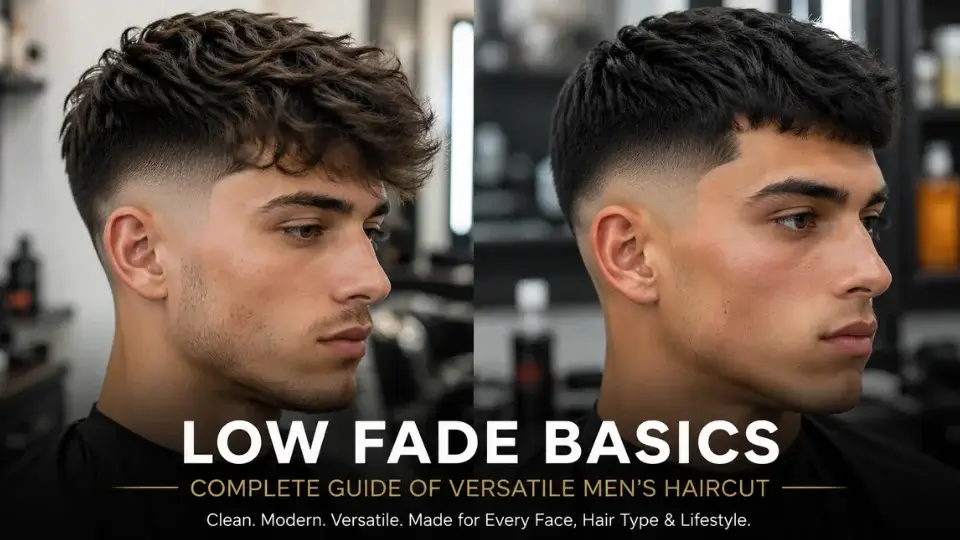
Low Fade Basics-If you’ve been searching for a haircut that works for almost every face shape, hair type, and lifestyle — you’ve just found it. The low fade has become one of the most searched and requested haircuts worldwide, and for good reason. Clean, modern, and endlessly customizable, it’s the foundation for dozens of popular styles — from the classic low fade taper to the trendy drop low fade, and everything in between.
This guide covers everything you need to know under the Low Fade Basics category: what it is, how it differs from other fades, and which variation is right for you.
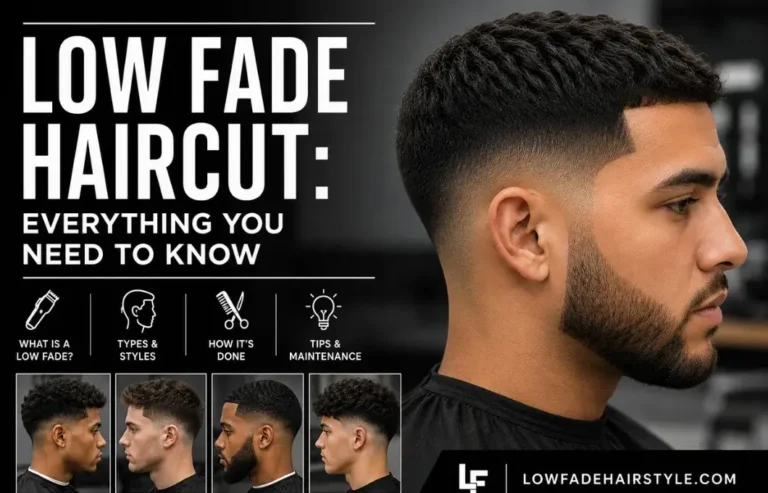
What Is a Low Fade?
A low fade haircut is a style where the hair is gradually cut shorter — or “faded” — starting from a point just above the ears and the neckline. Unlike other fade types, the transition begins low on the sides and back of the head, which is what gives it its name.
The key characteristic of a low fade is its subtle, controlled blend. The hair doesn’t dramatically shorten high up on the sides; instead, the fade starts near the natural hairline, giving a clean but not overly dramatic finish. This makes it one of the most versatile and wearable fades available.
Why Is the Low Fade So Popular?
The numbers speak for themselves: “low fade taper” alone pulls over 1 million monthly searches, making it one of the most sought-after haircut terms on the internet. Here’s why:
- Works with almost any hair type — curly, straight, wavy, thick, or thin
- Suits most face shapes — oval, round, square, and more
- Professional enough for work, stylish enough for weekends
- Pairs with dozens of top styles — from buzz cuts to long hair, mullets to man buns
- Low maintenance between barber visits
Whether you’re rocking a low fade with curly hair, a low fade with a beard, or a classic low fade with a comb over, the base cut adapts to your vision.
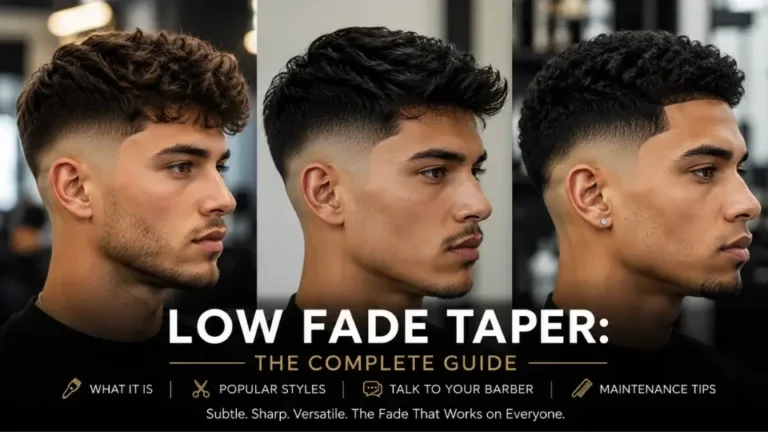
Low Fade Taper: The Complete Guide
The low fade taper is the single most popular variation, combining two classic barbering techniques. Here’s how they work together:
- Taper: the hair gradually shortens as it moves down toward the neck and ears, but the skin is never fully exposed
- Low fade: the fade starts at a low point on the head — tight to the ears and neckline
Together, the low fade taper creates a refined, structured look that’s both timeless and modern. It’s the go-to request at barbershops globally, and it’s ideal if you want a clean finish that doesn’t look too sharp or aggressive.
Best for: Office environments, formal occasions, and anyone who wants a clean cut without a dramatic contrast.
Top styles that pair with a low fade taper:
- Textured crop
- Slick back
- Side part
- Crew cut
- Comb over
Low Fade vs Taper: Key Differences Explained
This is one of the most common questions in any barbershop: “What’s the difference between a low fade and a taper?”
| Feature | Low Fade | Taper |
| Skin exposure | Yes — usually reaches skin or close to it | No — hair never goes to skin |
| Start point | Low on the head (near ears/neckline) | Gradually shortens down the sides |
| Contrast | More pronounced blend | More subtle, natural blend |
| Look | Modern, edgy-yet-clean | Classic, conservative |
| Maintenance | Needs more frequent visits | Grows out more naturally |
A taper is essentially a more natural, gradual shortening of the hair. A low fade involves a distinct, blended transition that can go down to the skin. Many cuts combine both techniques — hence the popularity of the “low fade taper.”
Bottom line: If you want something conservative and office-safe, lean toward a taper. If you want a sharper, more modern look, go for the low fade.
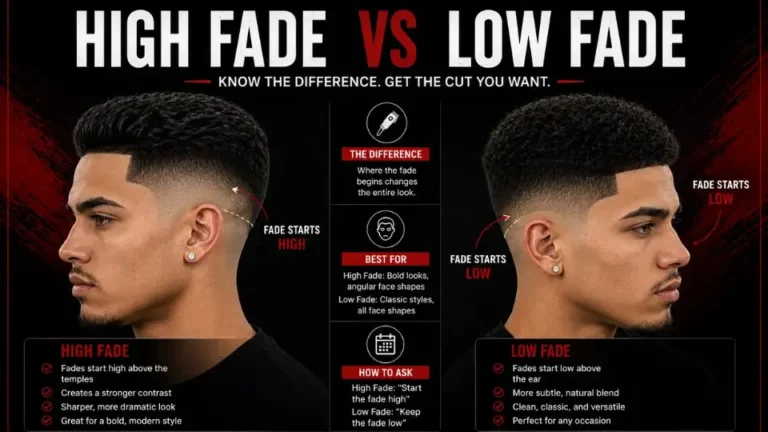
High Fade vs Low Fade: Which One Is Right for You?
With 6,600+ monthly searches on “high fade vs low fade,” this comparison is clearly on a lot of people’s minds. Here’s the breakdown:
High Fade
- The fade starts high up on the sides, often at the temples or above
- Creates a dramatic, bold contrast between the top and sides
- Looks best on oval and diamond face shapes
- More of a statement cut; less subtle
- Great for: pompadours, Mohawks, flat tops
Low Fade
- The fade starts just above the ears and neckline
- Offers a subtle, clean contrast
- Flatters most face shapes, including round and square
- Versatile and wearable in almost any setting
- Great for: textured crops, slick backs, comb overs, buzz cuts
Which should you choose?
Choose a high fade if you want something bold and attention-grabbing, and your face shape can carry the dramatic contrast.
Choose a low fade if you want something polished and versatile that works for both casual and professional settings.
For those still unsure, a mid fade sits squarely between the two — which brings us to the next comparison.
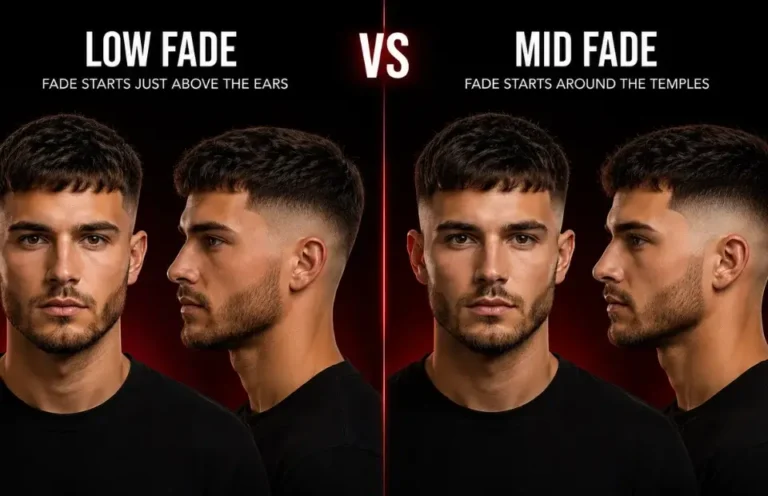
Mid Fade vs Low Fade: Which Cut Suits Your Look?
“Mid fade vs low fade” sees nearly 2,000 monthly searches, which tells you plenty of people are caught between these two options.
Mid Fade
- The fade starts at the midpoint of the head — roughly around the temples
- Offers a balanced contrast — more visible than a low fade, less extreme than a high fade
- Works especially well with medium-length tops, quiffs, and pompadours
Low Fade
- Starts lower, keeping more hair on the sides
- Looks cleaner and more conservative overall
- Pairs well with longer tops, curly hair, and textured styles
The rule of thumb:
- Want something closer to a natural hairline with a cleaner finish? → Low fade
- Want more contrast without going full high fade? → Mid fade
- Unsure? Ask your barber for a low-to-mid fade and let them find your sweet spot
Drop Low Fade: What It Is & Why It’s So Popular
The drop low fade is a stylish variation on the standard low fade — and it’s drawing over 60,000 monthly searches for good reason.
In a standard low fade, the fade line runs fairly straight and level around the head. In a drop low fade, the fade line drops behind the ear, following the natural curve of the head downward toward the neckline. This creates a curved, more natural-looking transition.
Why People Love the Drop Low Fade
- More natural appearance — follows the head’s shape rather than running straight across
- Suits oval and longer face shapes particularly well
- Cleaner look at the neckline — the drop removes bulk that can look boxy
- Great for curly and wavy hair, as the natural drop complements texture
Drop Low Fade vs Low Fade: The Key Difference
The main visual distinction is the shape of the fade line. A standard low fade runs roughly parallel to the ground. A drop low fade curves down behind the ear, creating a more sculpted, tapered appearance at the back.
If you want a low fade that looks especially refined from every angle — front, side, and back — the drop version is worth asking your barber about.
Types of Low Fade: Find Your Style
The low fade is more of a foundation than a complete style. Here’s a quick overview of the most popular combinations:
By Hair Length
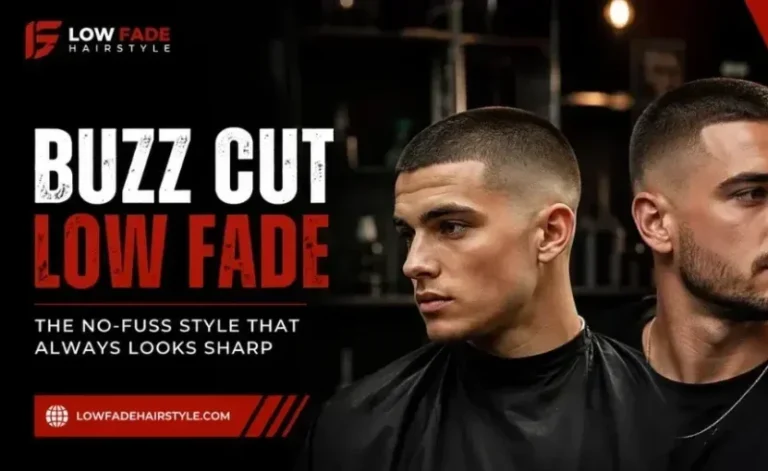
- Low fade buzz cut — ultra-short, ultra-clean; one of the most low-maintenance options
- Low fade short hair — classic and sharp; easy to maintain
- Low fade medium hair — versatile middle ground; works with textures and styles
- Low fade long hair — contrast between longer top and short faded sides for a dramatic effect
By Hair Type
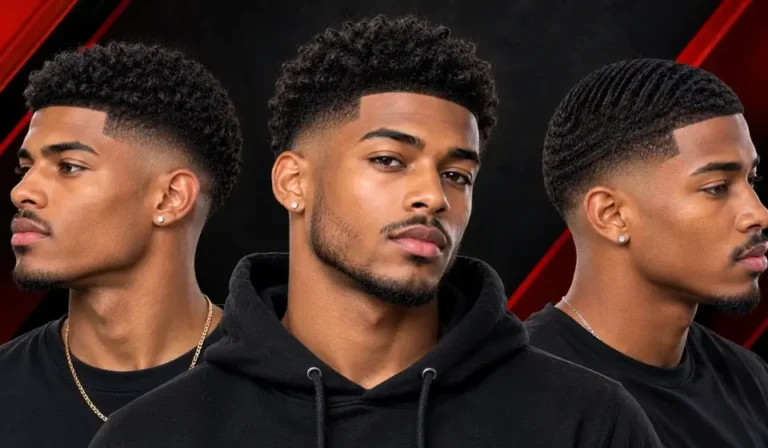
- Low fade curly hair — the fade adds definition and structure to natural curls
- Low fade straight hair — clean lines that look especially sharp and precise
- Low fade wavy hair — textured, effortless, and stylish
By Style on Top
- Low fade comb over — a timeless, professional look
- Low fade textured crop — modern and easy to style
- Low fade slick back — sleek, polished, and sharp
- Low fade fringe — fashionable and youthful
- Low fade mullet — bold and retro-modern
- Low fade man bun — long on top, clean on the sides
- Low fade with beard — one of the most popular combinations; the fade blends seamlessly into beard stubble
How Short Does a Low Fade Go? Understanding the Numbers
When you sit in the barber’s chair, they’ll often talk in clipper guard numbers. Here’s a quick cheat sheet for a low fade haircut:
| Guard Number | Length | What It Looks Like |
| 0 (skin/bald) | 0mm | Fully shaved — often the base of a skin fade |
| 0.5 | ~1.5mm | Very close, slight shadow |
| 1 | ~3mm | Very short, minimal stubble look |
| 2 | ~6mm | Short, clean look |
| 3 | ~10mm | Short but with some coverage |
| 4–5 on top | ~12–16mm | Common request for the top section |
| 8 on top | ~25mm | Longer top, great for textured styles |
A typical low fade starts with a 0 or 1 at the very base, blending up through 2, 3, and higher as it rises up the sides. Common requests include “low fade with a 5 on top” or “low fade with an 8 on top” — these describe the length left on the top section.
How to Ask for a Low Fade at the Barbershop
If you’re not sure how to communicate what you want, here’s a simple script:
“I’d like a low fade on the sides and back, starting just above the ears. Fade it down to a [0/1/2] at the base. Keep the top at a [number or length], and [leave it natural / texture it / slick it back].”
Bring a reference photo — it’s always the easiest way to get exactly what you want.
Low Fade Frequently Asked Questions
What is a low fade?
A low fade is a haircut where the hair gradually shortens, starting from a point low on the sides — just above the ears and near the neckline. It blends down to a shorter length or bare skin at the base.
What is a low fade haircut vs a taper?
A taper gradually shortens the hair without going to the skin. A low fade goes shorter, often reaching skin level, and creates a more defined transition. Many cuts combine both techniques.
Where does a low fade start?
A low fade typically starts just above the ear and the neckline — lower than a mid or high fade.
Who should get a low fade?
Almost anyone. The low fade is one of the most universally flattering haircuts because it doesn’t dramatically alter the overall silhouette. It works for most face shapes, hair types, and lifestyles.
How often should I get a low fade touched up?
Every 2–4 weeks for a clean look. The fade grows out faster than the top, so regular barber visits keep it sharp.
Can you get a low fade with curly hair?
Absolutely. A low fade with curly hair is one of the most popular combinations. The fade adds structure and definition that complements natural texture beautifully.
Ready to Explore More?
This category — Low Fade Basics — is your starting point. Use it to understand the fundamentals before diving into specific styles, comparisons, and tutorials. Check out the individual articles in this section for deeper dives on each topic:
- Low Fade Taper: The Complete Guide
- Low Fade Haircut: Everything You Need to Know
- Low Fade vs Taper: Key Differences Explained
- High Fade vs Low Fade: Which One Is Right for You?
- Mid Fade vs Low Fade: Which Cut Suits Your Look?
- Drop Low Fade: What It Is & Why It’s So Popular
Whether you’re visiting a barber for the first time or looking to refine your go-to style, the low fade is one of the smartest foundational cuts you can choose.