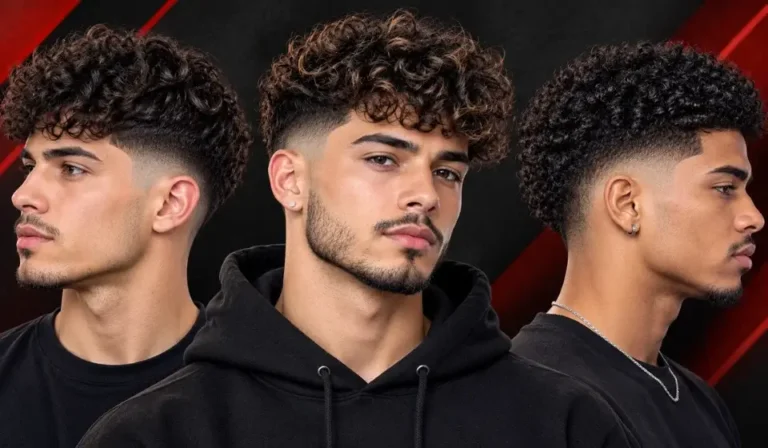
Low Fade Taper: The Complete Guide
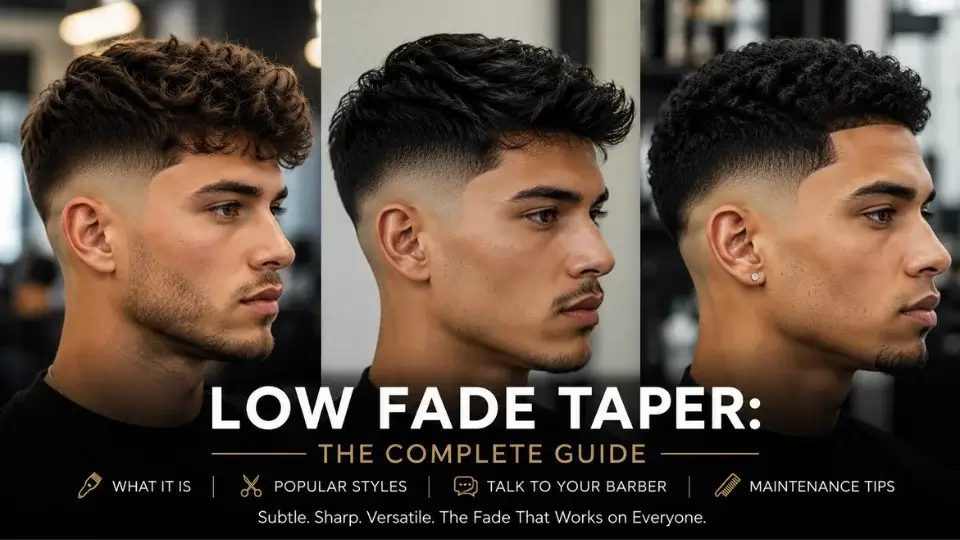
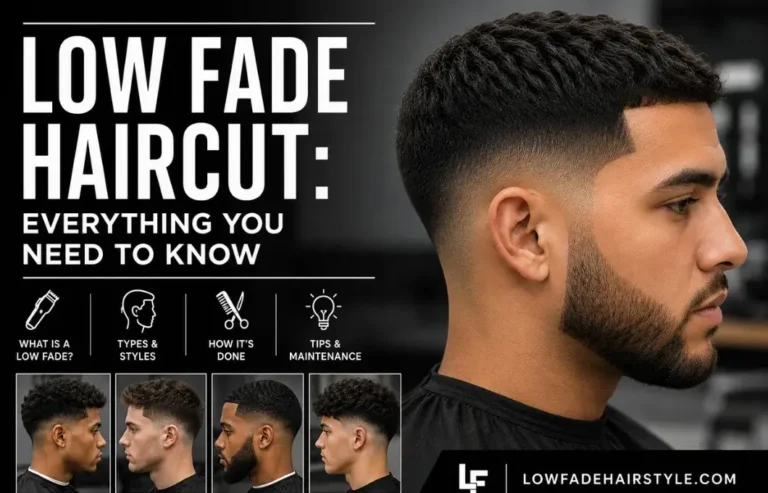
If you’ve spent any time scrolling barbershop inspiration or asking your barber for “something clean but not too short,” chances are you’ve landed on the low fade taper. It’s the single most searched fade style online, and for good reason—it’s subtle, sharp, and works on almost anyone, regardless of hair type, hair length, or face shape.
This guide breaks down everything you need to know about the low fade: what it actually is; how it’s different from a high fade, mid fade, skin fade, and drop fade; the most popular variations to try; how to talk to your barber; and how to maintain it at home.
What Is a Low Fade Taper?
A low fade taper is a haircut where the hair gradually shortens—or “fades”—starting low on the head, typically just above the ears and around the nape of the neck, rather than higher up near the temples or crown. The blend is gradual rather than abrupt, which is what separates a “fade” from a simple buzz cut with clipper lines.
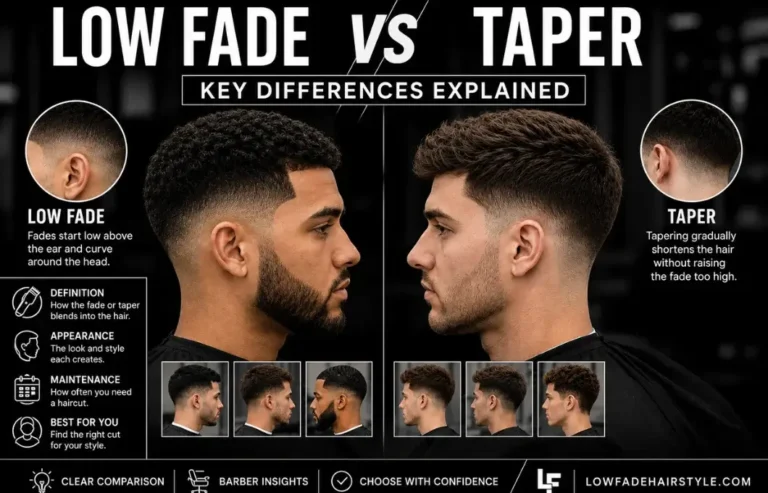
The terms “low fade” and “low taper” are often used interchangeably, and most people searching for one mean the other. Technically, a taper refers to hair that gradually gets shorter without necessarily reaching the skin. At the same time, a fade usually blends all the way down to skin or near-skin at the bottom. A low fade can be either a soft low taper fade, which keeps a bit of length even at the lowest point, or a low skin fade, which blends completely down to bare skin around the ears and neckline.
What makes the low fade so versatile is how much length it leaves on top. Because the fade itself stays low and close to the hairline, you can pair it with almost any length on top—from a tight buzz cut to long, flowing hair—without the haircut looking unbalanced.
Styling Tip: For a low fade with a taper look, use a small amount of matte pomade or styling cream to add texture and control. Keep the top slightly longer for a versatile style that can be worn messy, slicked back, or naturally textured.
Low Fade vs. Other Fade Styles
One of the most common questions people have is how a low fade actually compares to other fade types. Here’s a breakdown.
Low Fade vs. High Fade
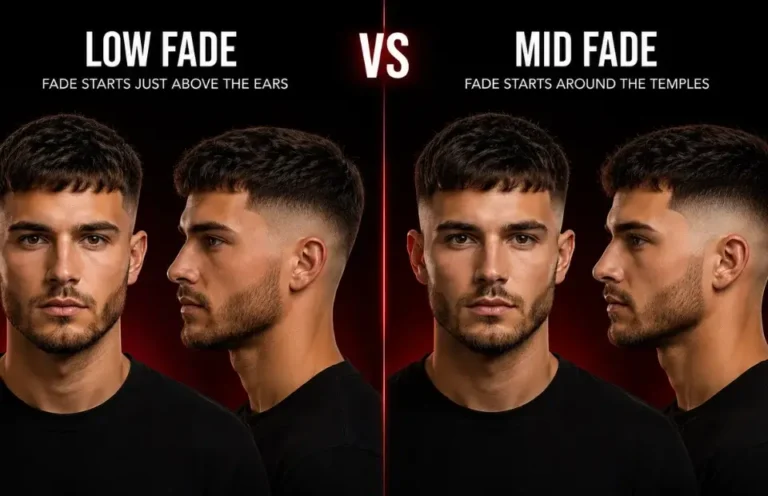
The difference comes down to where the fade begins. A high fade starts well above the ears, often near the temple or even higher, creating a sharp, dramatic contrast between the short sides and the length on top. A low fade keeps the transition much closer to the hairline, resulting in a softer, more natural-looking blend. High fades read as bolder and more aggressive; low fades read as cleaner and more understated—a better fit for office environments, school settings, or anyone who prefers a more conservative look.
Low Fade vs. Mid Fade
A mid fade splits the difference, starting around the temple area. If a high fade feels too dramatic and a low fade feels too subtle, a mid fade is the middle ground. Many barbers consider the mid fade the most universally flattering option, while the low fade is favored by people with rounder or fuller faces who want to avoid extra width near the temples.
Low Fade vs. Low Taper
As mentioned above, these are close cousins rather than true opposites. A low taper generally leaves slightly more length at the bottom of the fade and doesn’t necessarily go down to skin, giving a softer, almost “grown-out” feel. A low fade more often blends all the way to the skin. If you’re not sure which to ask for, describing the look you want (skin-tight vs. softer blend) matters more than the exact terminology.
Low Fade vs. Drop Fade
A drop fade follows the natural curve of the head, dropping lower behind the ear before curving back up toward the nape. It’s essentially a low fade with a stylistic detour — the fade line “drops” instead of staying straight, which adds visual interest and works particularly well with curly or textured hair on top.
Low Fade vs. Skin Fade / Bald Fade
“Skin fade” and “bald fade” both refer to a fade that blends all the way down to the skin, with zero hair length at its shortest point. A low fade can be a skin fade (a low skin fade) or it can stop at a very short guard length instead of bare skin. If you want maximum contrast and a crisp clean line, ask specifically for a low fade to skin.
Low Fade vs. Burst Fade
A burst fade curves around the ear in a half-moon shape rather than running in a straight line across the side of the head. It’s typically paired with shorter cuts and works well for fades that need to wrap cleanly around the ear without a hard line.
Anatomy of a Low Fade: Guard Numbers and Where It Starts
Clipper guards are measured in increments, generally from a 0 (skin) up through 8 or higher for longer lengths. A typical low fade uses a 0 to 1 guard at the very bottom near the hairline and neck, gradually stepping up through 2, 3, and 4 guards as it moves up the head, before blending into whatever length is left on top.
On top, length is usually described in either guard numbers or inches: a low fade with 2 inches on top gives noticeable texture and movement, while something like a low fade with 5 on top or 8 on top keeps more length for styling versatility. Curlier or coarser hair types often look best with slightly more length on top — guard 6 to 8 — so the curl pattern has room to show.
Where the fade “starts” matters too. A low fade typically begins right around or just above the ear, hugging close to the natural hairline rather than climbing toward the temple. Around the back of the neck, many people opt for a low fade en v — a V-shaped neckline trim that follows the natural point at the nape, rather than a flat, squared-off line. It’s a small detail, but it changes the overall silhouette of the haircut significantly.
Popular Low Fade Styles to Try
The low fade isn’t a single look — it’s a foundation you can build almost any style on top of. Here are some of the most requested variations.
Low Fade Buzz Cut.
The simplest combination: short, even length on top paired with a low fade on the sides. Easy to maintain, fast to cut, and a great low-maintenance option for first-timers.
Low Fade with Comb Over.
A classic, professional-looking combination. The sides stay short and faded low, while the top is left long enough to comb to one side, often with a defined part.
Low Fade Crew Cut.
A slightly longer, textured version of the buzz cut on top, fading down low on the sides — a great middle ground between the buzz cut and longer styles.
Modern Mullet Low Fade.
A trending combination that pairs a faded low side with length left longer at the back and crown, giving a contemporary spin on the classic mullet silhouette.
French Crop Low Fade / Textured Crop Low Fade.
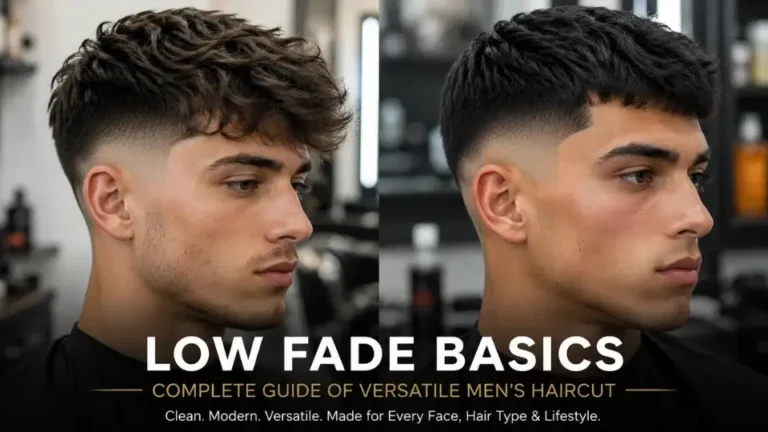
Short, textured fringe on top with a clean low fade underneath — one of the most popular modern men’s haircuts because it photographs well and requires minimal styling.
Low Fade with Slick Back.
Length on top is grown out and styled back and up using pomade or wax, while the sides stay tight with a low fade for contrast.
Bald Low Fade.
The sides and back fade all the way to skin at the bottom, creating maximum contrast with whatever length remains on top.
Military Low Fade.
A close, neat low fade paired with very short length on top — clean, sharp, and easy to maintain in regulated environments.
Low Fade Blowout.
Length on top is left longer and blown out with volume, creating height and texture, while the sides remain tightly faded low for balance.
Low Fade Afro.
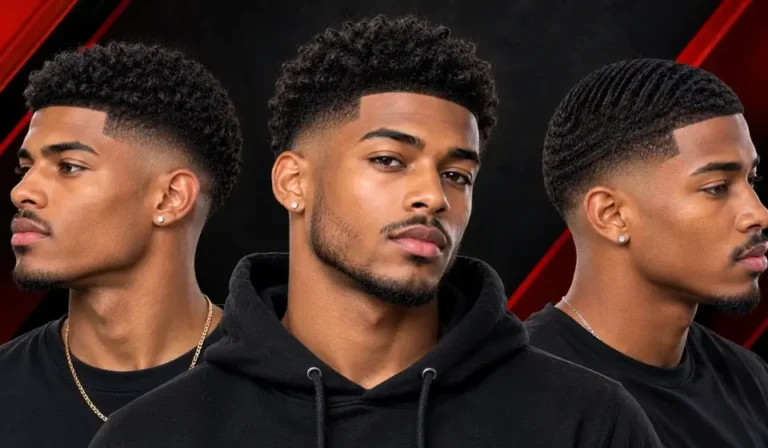
For naturally curly or coily hair, the low fade trims the sides close while leaving the top to grow into a rounded afro shape, keeping the silhouette clean without flattening the natural texture.
Low Fade for Every Hair Type
One of the biggest advantages of the low fade is how well it adapts across hair types.
Curly hair (types 3a–4c).
A low fade for curly hair works best when slightly more length is left on top — usually a guard 6 or higher — so curls have room to form and aren’t cut so short they lose their shape. Many curly-haired clients also prefer a drop fade variation, since the curved fade line complements curl texture better than a straight line.
Straight hair.
A low fade for straight hair tends to look cleanest with a sharper, more defined fade line, since straight hair shows contrast and blending more clearly than curly textures.
360 waves.
A low fade pairs naturally with a 360-waves routine, since keeping the sides low and tight makes the wave pattern on top more visible and easier to maintain with brushing and durags.
Long hair on top.
A low fade with long hair on top works as a contrast cut — tight, faded sides against flowing length above — popular with people growing out their hair who still want a defined, groomed silhouette.
Thinning hair.
A low fade can also work well for thinning hair, since keeping the sides short and gradually blended draws less attention to density differences across the scalp than longer, uniform lengths would.
Low Fade and Face Shape
Face shape plays a role in how flattering a low fade will look. For rounder face shapes, a low fade is often recommended over a high fade, since it avoids adding extra width near the temples and instead elongates the face slightly by keeping more length and structure on top. For oval face shapes — generally considered the most versatile — almost any version of the low fade works, from a tight buzz cut to a longer comb-over style, since the natural proportions of an oval face balance well with most haircut shapes.
Adding a Beard, Line Up, Fringe, or Design
A low fade pairs naturally with a few finishing touches that barbers commonly add:
- Beard. A low fade with a beard typically includes blending the beard line into the fade itself, so the transition from hairline to facial hair looks seamless rather than like two separate haircuts.
- Line up (edge up). A sharp line up along the hairline and temples adds definition to a low fade, particularly useful for styles with a comb-over or slick back where a crisp part line matters.
- Fringe. A low fade with a textured fringe brings the focal point of the haircut to the front, with shorter, choppy pieces falling over the forehead.
- Design. Some people add a shaved line or pattern detail into the fade itself, usually along the temple or part line, for extra visual interest.
How to Ask Your Barber for the Perfect Low Fade
Miscommunication is the most common reason a fade comes out wrong. Before you sit down, it helps to know roughly what you want in three parts: how short the bottom of the fade should be (skin, or a specific guard number), how high up the fade should start (low, around or just above the ear), and how much length to leave on top (in guard numbers or inches).
A useful way to phrase it: “I’d like a low fade — keep it close to the skin around the ears and neck, blend it up to about a [guard number] by mid-side, and leave [length] on top.” Bringing a reference photo also removes most of the guesswork, since terms like “low,” “skin,” and “blend” can mean slightly different things to different barbers.
Can You Do a Low Fade at Home?
A low fade is one of the more forgiving fades to attempt at home, but it still takes patience. Using a clipper with multiple guard attachments (0, 1, 2, and 3 are the essentials), start with the longest guard you’re comfortable with and work in upward, overlapping strokes, gradually switching to shorter guards as you move toward the bottom of the fade near the ears and neckline. Going slowly and checking your work frequently in a mirror — rather than trying to finish one full pass — is the easiest way to avoid an uneven, patchy result.
If a fade does come out patchy or uneven, the most common fix is to go one guard length shorter overall to even out the blend, since it’s far easier to remove a visible line by shortening the surrounding hair than to try to “fix” the line itself.
Maintaining a Low Fade
A low fade typically needs a touch-up every two to three weeks, since the short hair near the hairline grows out and softens the sharp blend faster than the longer hair on top does. Between visits, a light pomade, matte clay, or texturizing spray helps keep the top styled without weighing it down, while a soft brush or comb helps train any length on top in the direction you want it to fall.
How Much Does a Low Fade Haircut Cost?
Pricing varies significantly by location and barbershop tier, but a standard low fade haircut generally falls in line with any other men’s fade or taper service — typically somewhere between a basic walk-in cut and a premium barbershop experience with line-up and beard work included. Adding a beard trim, design work, or a hot towel finish will usually push the price toward the higher end of that range.
Common Mistakes to Avoid
A few mistakes come up again and again: going too short too fast (skipping guard lengths instead of blending gradually), starting the fade too high when “low” was the goal, not leaving enough length on top for curlier hair types, and waiting too long between trims, which causes the sharp blend to grow out and lose definition.
Frequently Asked Questions
What is a low fade haircut?
A low fade haircut is a style where the hair gradually shortens starting low near the ears and nape of the neck, blending up into whatever length is kept on top.
Where does a low fade start?
A low fade typically starts right around or just above the ear, staying close to the natural hairline rather than climbing toward the temple or crown the way a high or mid fade does.
Is a low taper the same as a low fade?
They’re closely related but not identical. A low taper usually leaves a bit more length at its shortest point, while a low fade more often blends all the way down to the skin for a sharper contrast.
Who should get a low fade?
The low fade suits people who want a clean, professional, low-maintenance look without the dramatic contrast of a high fade — it’s especially popular for office environments, rounder face shapes, and anyone new to fades who wants a more forgiving, subtle blend.
How do I style a low fade?
Styling mostly comes down to whatever length is left on top — a comb-over needs pomade and a comb, a textured crop needs a light clay worked through with fingers, and a buzz cut on top needs little to no styling at all.
Final Thoughts
The low fade taper earns its place as the most-searched fade style for a simple reason: it’s flexible. Whether you’re after a sharp military cut, a comb-over for the office, a textured crop for everyday wear, or something bold like a modern mullet, the low fade gives you a clean foundation that adapts to your hair type, face shape, and personal style — without demanding constant upkeep between visits.