Drop Low Fade
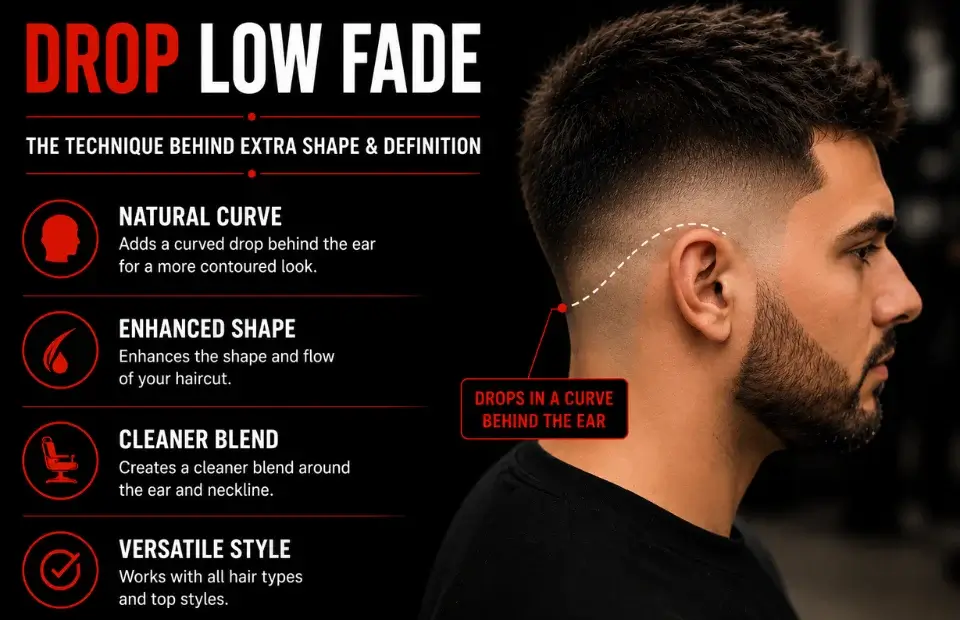
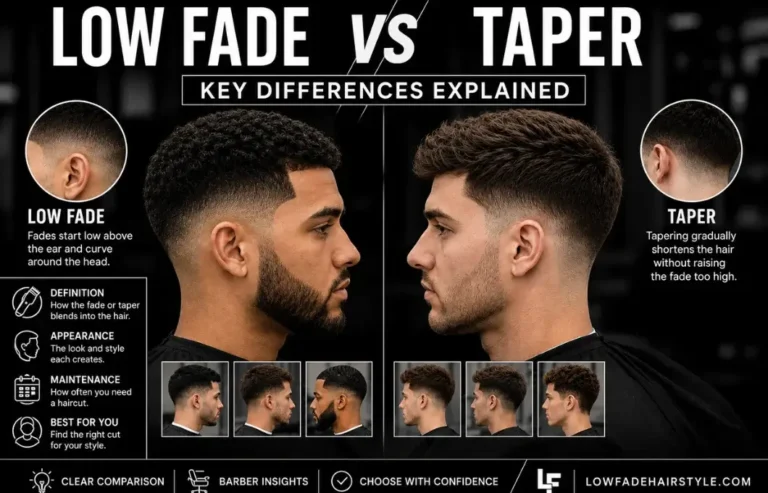
A drop low fade isn’t a separate haircut from a low fade—it’s a specific technique applied to it. While a standard low fade follows a straight, level line as it tapers down near the ears and neckline, a drop fade curves downward behind the ear before leveling back out, creating a rounded, sweeping shape instead of a flat one. Combine the two, and you get a low drop fade: a fade that stays low on the head (like a classic low fade) but drops in a curve behind the ear for extra shape and definition.
This guide breaks down exactly how a low drop fade differs from a regular low fade, what guard numbers barbers typically use, who the style suits, and how to describe it clearly in the chair.
What Is a Low Fade?
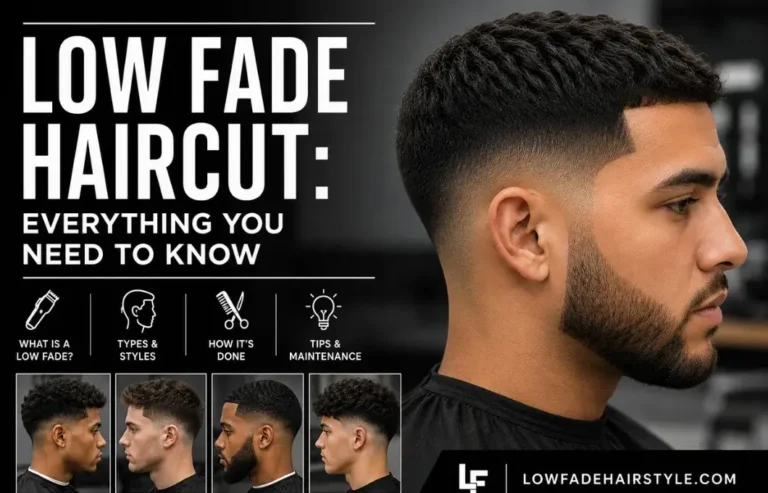
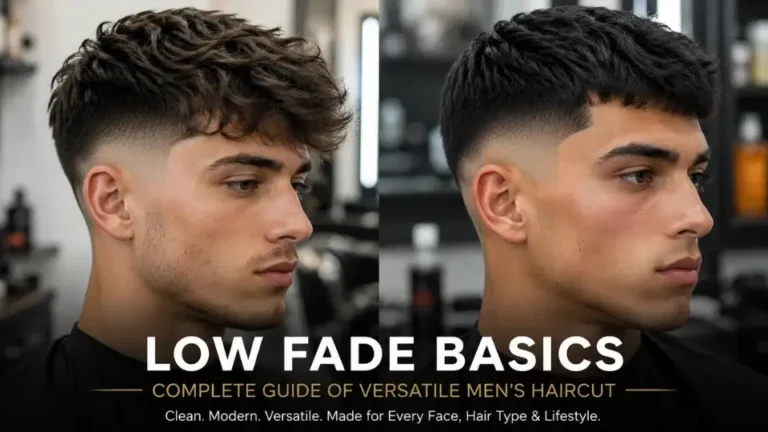
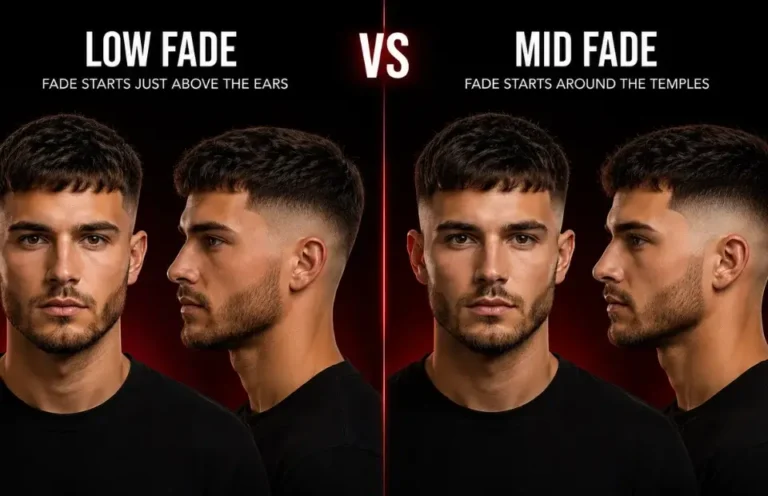
A low fade keeps its taper close to the hairline, starting near the ears and nape of the neck before blending into longer hair on top. It’s a subtle, low-contrast style that reads as clean and professional, since most of the fade line sits below eye level and the overall look stays conservative compared to a mid or high fade.
What Is a Drop Fade?
A drop fade describes the shape of the fade line rather than its height. Instead of following a straight, horizontal path around the head, a drop fade curves — or “drops” — downward as it passes behind the ear, following the natural curve of the skull before leveling out again toward the back. This curved line adds visual interest and works especially well with textured or curly tops, since it echoes the round shape of the hairstyle above it.
What Is a Drop Low Fade?
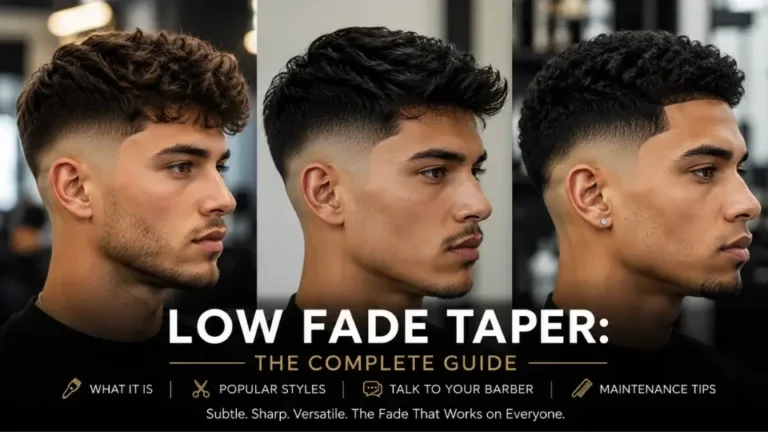
A low drop fade combines both concepts: the fade stays low on the head (minimal height, close to the ears and neckline) while also curving in that signature drop shape behind the ear. The result is a fade that’s still subtle and workplace-friendly like a standard low fade, but with a bit more shape and personality thanks to the curved line.
In short:
Low fade = where the fade sits (close to the ears/neckline)
Drop fade = how the fade line is shaped (curved instead of straight)
Low drop fade = both combined—a low, curved fade line
Low Fade vs Drop Low Fade: Which Should You Choose?
If you want the simplest, most universally safe cut, a standard low fade is hard to beat—it’s quick to maintain, suits almost any hair type, and rarely draws attention for the wrong reasons. If you want a bit more shape and personality without sacrificing the low-key placement, a low drop fade is the better pick, especially if you have curly or textured hair that benefits from the rounded line.
Neither is “better” outright—the decision comes down to:
Hair texture: Curly and coily hair tends to show off the drop shape more clearly than straight hair.
Desired formality: A straight low fade reads slightly more traditional; a drop fade feels a touch more modern and stylized.
Barber availability: Not every barber is equally comfortable free-handing a clean drop—ask to see examples of their drop fade work specifically.
Guard Numbers for a Low Drop Fade
Guard sizing works similarly to a standard low fade, though the drop itself is shaped with clippers rather than a specific guard number. Common combinations include:
Skin or #1 near the ear where the drop curves
#4–#6 blending up through the taper
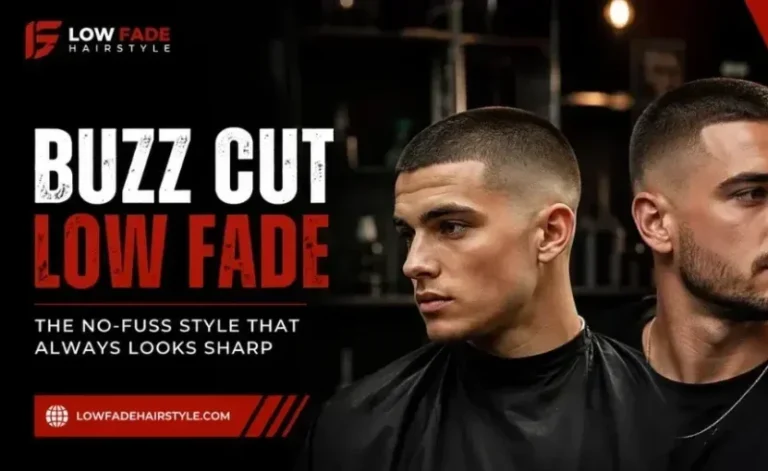
#6–#8 left on top, depending on desired length and texture
If you’re after a shorter, cleaner overall look, ask your barber to keep the guards on the lower end (around a #6 on top); for more length to style curls or waves, request an #8 guard buzz or similar on the crown while keeping the drop itself tight near the ear.
Drop Low Fade with Curly Hair or Wavy Bangs
The drop fade shape pairs especially well with curly hair, since the curve behind the ear mirrors the natural roundness of curl patterns and makes the transition from short sides to textured top feel more intentional. It’s also a popular pairing with wavy bangs left longer on top—the drop line frames the face while the bangs add movement and softness up front.
For straighter hair, the drop is still visible but reads more subtly, since there’s less natural texture to interact with the curved line.
Low Drop Fade with a Beard
Just like a standard low fade, a low drop fade can be blended directly into a beard for a connected, cohesive look. Ask your barber to carry the drop’s curve into the beard line near the ear rather than stopping abruptly—this keeps the transition smooth and avoids a harsh, disconnected edge between the haircut and facial hair.
How to Ask Your Barber for a Drop Low Fade
Because “drop fade” describes a shape rather than a height, clear communication matters even more here than with a standard fade:
Specify both elements. Say “a low fade that drops behind the ear” rather than just “drop fade,” so your barber knows to keep the overall placement low.
Bring a reference photo. The curve of a drop fade varies in intensity from a slight dip to a sharper hook—a photo shows exactly how pronounced you want it.
Mention guard preferences. If you know you want an #8 guard buzz on top or a tighter skin fade near the drop, say so upfront.
Ask about add-ons. Wavy bangs, a beard connection, or a burst-fade-style curve around the whole ear can all be layered onto a low drop fade—flag these before clippers start.
Maintenance for a Drop Low Fade
A low drop fade generally needs the same touch-up schedule as a standard low fade — roughly every 3–4 weeks — since the fade sits low on the head and regrowth takes longer to blur the line. However, because the drop shape is freehanded rather than following a straight guide, it can lose its defined curve slightly faster than a straight fade as hair grows in around the ear. Regular trims keep the curve crisp; waiting too long between visits makes the drop harder to redefine cleanly on the next cut.
Common Questions About Drop Fades vs Low Fades
People often assume “drop fade” and “low fade” describe the same haircut, but, as covered above, they describe two entirely different things—one is about placement, the other is about shape. It’s entirely possible to have a high drop fade or mid drop fade just as easily as a low one; the “drop” simply refers to the curved shape of the line, regardless of how high or low that line starts on the head.
Where the Drop Fade Technique Comes From
The drop fade grew out of barbers experimenting with the classic fade to add more visual interest without changing the overall placement. Rather than inventing a new haircut, barbers started curving the guideline behind the ear—a small technical adjustment that made a big visual difference, especially on textured hair. Over time, it became popular enough to earn its own name, and today it’s requested as a specific style variation (“give me a drop fade”) almost as often as the height-based fades like low, mid, and high.
Common Mistakes When Getting a Drop Low Fade
Because the drop fade relies on a freehanded curve rather than a straight guideline, there’s more room for inconsistency if it’s not communicated clearly:
Confusing “drop” with “low.” Some people ask for a “drop fade,” assuming it automatically means low on the head—but a drop fade can be low, mid, or high. Always specify both.
Not bringing a reference photo. The intensity of the curve varies a lot between barbers’ interpretations of “drop fade,” so a photo prevents mismatched expectations.
Choosing a barber unfamiliar with drop shapes. Not every barber has practiced free-handing a clean curve—ask to see drop fade examples in their portfolio before committing.
Letting it grow out too long. Since the curve is freehand rather than following a guide length, it loses definition faster than a straight fade if touch-ups are delayed.
Skipping the beard connection conversation. If you have a beard, decide upfront whether you want the drop’s curve to flow into your beardline—this needs to be planned before cutting begins, not adjusted after.
Cost and Finding the Right Barber
A low drop fade typically costs about the same as a standard low fade since the technique doesn’t require additional products or significantly more time—just more precision. That said, some barbershops price freehand or “specialty” fades slightly higher due to the skill involved. When searching for a “low drop fade near me,” look specifically for barbers who showcase drop fade work in their portfolios or social media, rather than general fade haircuts, since the curved technique is a distinct skill that not every barber has refined.
Styling Tips for a Drop Low Fade
The top section is where you can make a low drop fade your own.
Curly or coily top: Use a lightweight curl cream to define natural texture without weighing it down—this lets the curve of the drop fade, and the shape of your curls complements each other.
Wavy bangs: Apply a light-hold pomade and brush bangs forward or to the side, letting the drop fade frame the face underneath.
Textured crop: A matte clay pushed through damp hair creates a piecey finish that pairs naturally with the rounded drop line.
Slicked-back top: For a more polished contrast, a shiny pomade slicked straight back highlights the curve of the drop fade underneath rather than competing with it.
Which Face Shapes and Hair Types Suit a Drop Low Fade
While placement (low, mid, high) is usually the bigger factor in matching a fade to your face shape, the drop shape itself has its own considerations:
Round or square faces often benefit from the added angularity a drop fade creates near the jawline, since the curve draws a subtle line that complements stronger facial features.
Oval and long faces can wear a drop fade comfortably too, though the effect is more decorative than corrective compared to how a mid or high fade might add visual height.
Fine or straight hair shows the drop shape less dramatically, since there’s less texture to catch the eye—it still looks clean, just more subtle.
Curly, coily, or wavy hair tends to make the drop fade’s curve stand out the most, which is part of why the style is so popular alongside natural texture and twist-outs.
Growth pattern also matters: hair that grows in strong directional patterns near the temple or hairline (common with cowlicks) can make free-handing a clean drop slightly trickier, so an experienced barber will adjust their approach rather than forcing a rigid curve that fights your natural hair growth.
Frequently Asked Questions
Q.1. What does a drop low fade look like?
A low drop fade looks like a standard low fade with a curved line that dips down behind the ear instead of staying flat, creating a rounded, sweeping transition rather than a straight one.
Q.2. What is the difference between a low fade and a drop low fade?
A low fade follows a straight line around the head, while a low drop fade curves downward behind the ear—the placement stays low in both, but the shape of the line differs.
Q.3. Is a drop low fade better than a regular low fade?
Neither is objectively better — a drop fade adds more shape and works especially well with curly or textured hair, while a straight low fade is simpler, faster to maintain, and slightly more conservative.
Q.4. What guard size is used for a drop low fade?
Most low drop fades use skin or a #1 near the ear, blending up through a #4–#6 taper, with #6–#8 left on top depending on the desired length.
Q.5. Does a drop low fade work with wavy or curly hair?
Yes, the curved shape of a drop fade pairs especially well with curly hair and wavy bangs, since the rounded line echoes natural curl texture and frames the face nicely.
Conclusion
A low fade and a low drop fade share the same low placement, but the drop fade adds a curved, freehanded shape behind the ear for extra dimension. If you want a simple, conservative cut, stick with a straight low fade; if you have curly or wavy hair and want a bit more shape, a low drop fade is worth requesting by name.