Low Fade vs Taper: Key Differences Explained
Walk into any barbershop and ask for a “taper” or a “low fade,” and you might get two very different haircuts—or the same one, depending on who’s holding the clippers. These two terms are among the most searched, most confused, and most interchangeably misused in men’s grooming. And yet, they describe genuinely different techniques with different visual outcomes.
If you’ve been asking yourself, “Low Fade vs Taper—which one should I get?” or “Is a low taper the same as a low fade?” this guide has every answer. We’ll break down exactly what separates the two cuts, how each one looks, which styles they pair with best, and how to ask your barber for the right one every single time.
What Is a Taper Haircut?
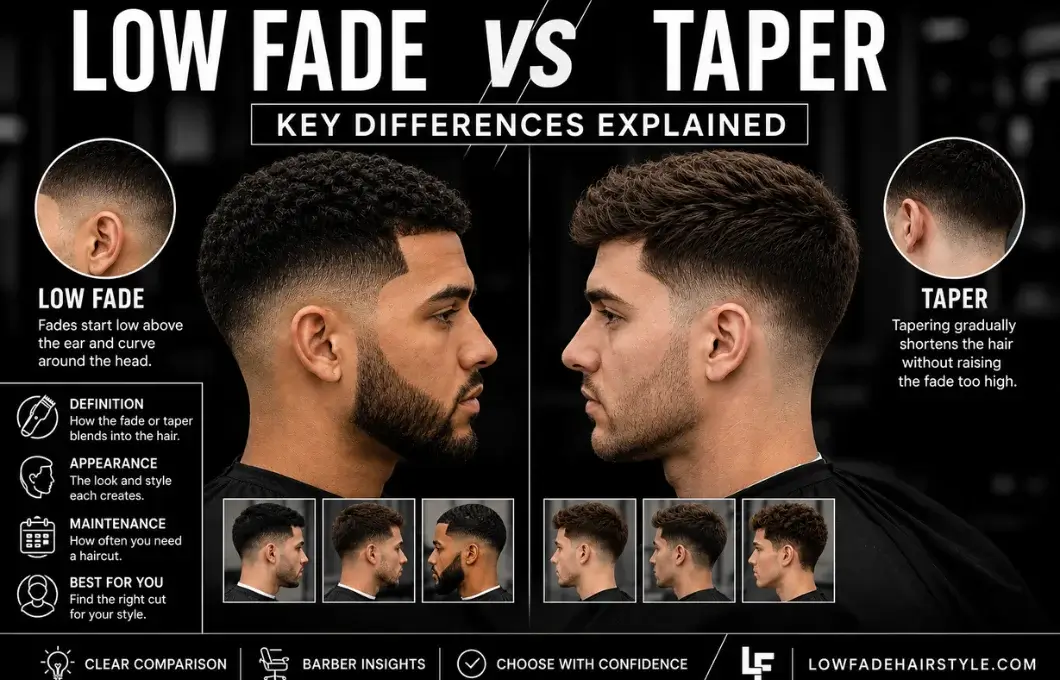
A taper is a gradual reduction in hair length from the top of the head down toward the sides, back, and nape of the neck. The key word is “gradual”—a taper never fully reaches the skin. Hair at the base of a tapered cut still maintains a visible length, even if it’s very short.
Tapers are considered one of the most classic and conservative options in men’s barbering. Think of the classic side part, the crew cut, or the Ivy League—all traditionally finished with a taper rather than a sharp fade. The result is a clean, natural-looking transition that keeps a gentleman’s finish without any dramatic contrast.
A taper works on all hair types—straight hair, wavy hair, curly hair—and is especially popular among men who want a professional, office-appropriate look that doesn’t require frequent touch-ups to stay neat.
What Is a Low Fade?
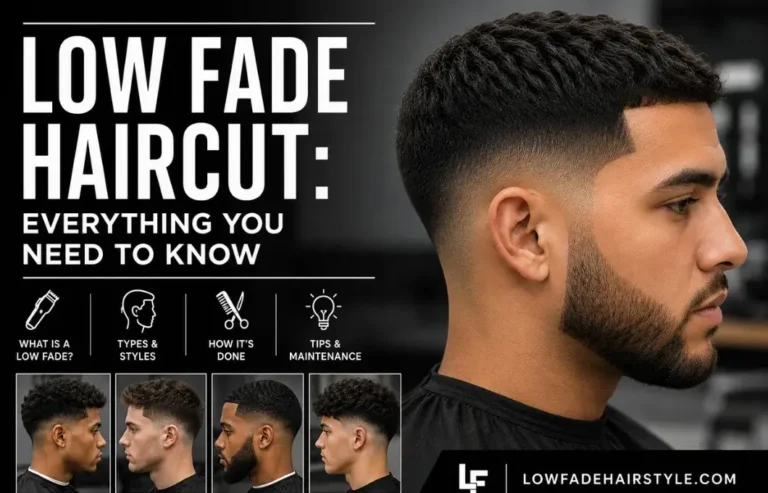
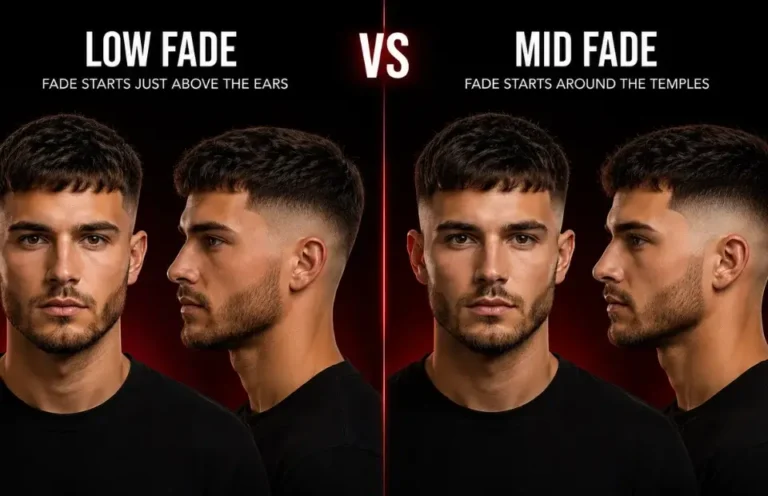
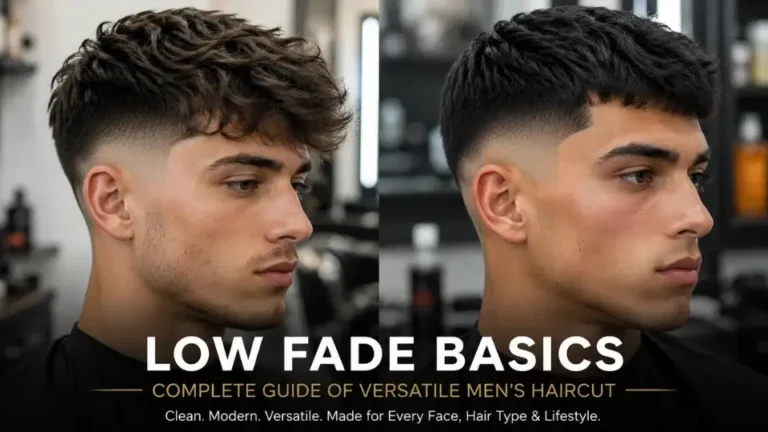
A low fade is a specific type of taper—but with a crucial distinction: it blends down much closer to the skin, often all the way to a 0 or 0.5 guard, starting the fade line low on the head, just above the ear and nape. Unlike a standard taper, the low fade creates a sharper, more defined gradient that visually separates the sides from the top.
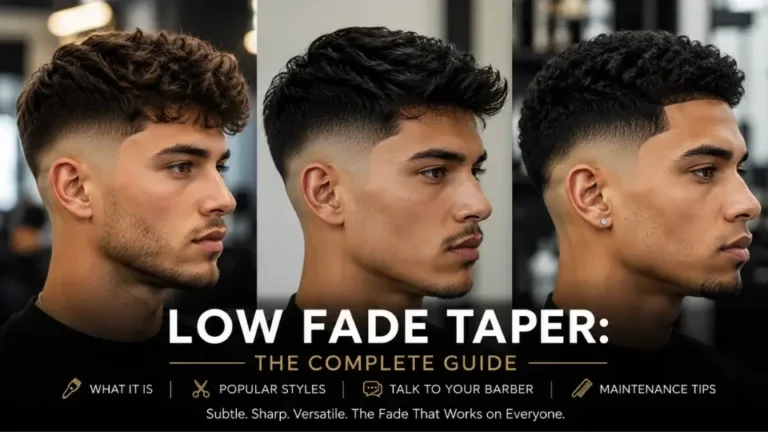
The low fade taper (the most searched version at over 1 million monthly searches) combines both philosophies—it starts low on the head like a standard low fade but maintains a slightly softer finish at the base, making it the most versatile option for men who want something between a conservative taper and a sharp modern fade.
Key variations of the low fade include:
- Low skin fade—blends completely to bare skin at the base
- Low bald fade—a clean shave all the way down, starting low
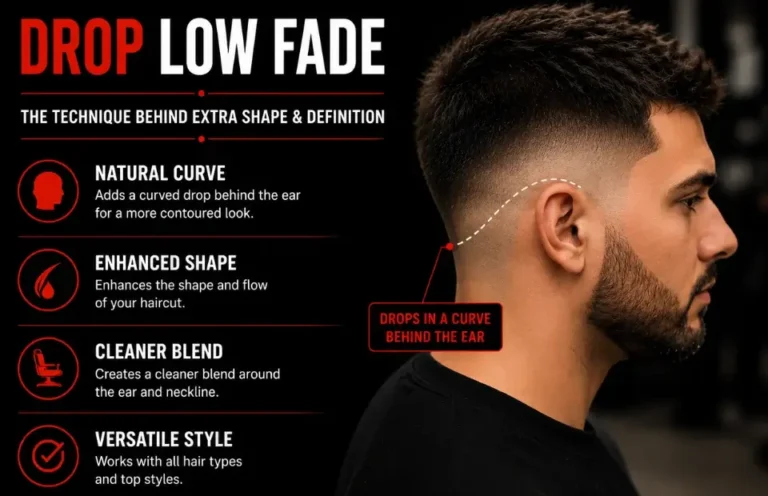
- Drop low fade—the fade line curves down behind the ear before rising again at the nape
- Low fade taper cut—a hybrid that blends to a very short but not-quite-skin length
Low Fade vs Taper: The Core Differences
Here’s where it gets precise. These are the five key differences between a low fade and a taper:
1. How Short the Hair Gets
A taper maintains visible hair at the lowest point—usually a 1, 2, or 3 guard. A low fade blends much shorter, often reaching a 0 (bare skin) or 0.5 guard. This is the most fundamental difference between the two cuts.
2. Contrast and Definition
A taper produces a soft, natural gradient—subtle and understated. A low fade creates a sharper, more defined line of contrast between the sides and the top. The lower the fade and the shorter the blend, the more defined that contrast becomes.
3. Placement on the Head
Both a taper and a low fade start their length reduction in roughly the same area—around the ears and nape. However, the effect looks different because the taper fades less aggressively, while the low fade pushes the hair much shorter within the same zone.
4. Maintenance Schedule
Tapers grow out more gracefully — the gradual length means the cut can look decent for 4–6 weeks without a touch-up. Low fades, by contrast, need refreshing every 2–3 weeks to keep the blend clean and the contrast sharp.
5. Style Pairings
Tapers suit classic styles: comb-overs, side parts, crew cuts, Ivy League cuts, and military haircuts. Low fades open up a wider modern range: textured crops, French crop low fade, slick back low fade, comb over with low fade, man bun, mullet, and buzz cut with low fade.
Low Fade vs Taper: Are They the Same?
This is one of the most common questions and the most important one to get right. A low taper fade (also called a low taper) is technically a hybrid: it starts at the same low position as a low fade but blends to a slightly longer length at the base—typically a 0.5 to 1 guard rather than bare skin.
The phrase “low taper fade” exploded globally after going viral as a meme in 2023–2024, flooding barbershops with requests from men who had no idea how to describe what they wanted. The underlying style, however, is legitimate and timeless. If you want the subtlety of a taper with a hint more definition than a standard conservative taper, a low taper fade is your answer.
Are Low Fade and Low Taper the Same?
Not quite. Think of it on a spectrum:
- Taper → gradual, stays above skin
- Low taper fade → starts low, blends close but not to zero
- Low fade → starts low, blends to skin or near-skin
- Low skin fade / low bald fade → starts low, fully shaved to skin
Which Styles Work Best with Each Cut?
Tapers pair best with classic crew cuts, side parts, ivy league, caesar cuts, comb backs, and military haircuts — delivering a clean, professional, and low-maintenance finish that stays sharp for weeks. Low fades shine with modern styles like the French crop, textured top, slick back, comb over with low fade, man bun, mullet, buzz cut, and beard pairings — making them the most versatile choice for any contemporary look.
Best Styles for a Taper:
- Classic crew cut with taper
- Ivy league / side part
- Military low fade (conservative version)
- Comb back or brush back
- Caesar cut with taper
- Short pompadour with taper
Best Styles for a Low Fade:
- Low fade with textured top or textured fringe
- French crop low fade — one of the most popular combos
- Slick back low fade or comb over with low fade
- Low fade with curly hair — curly top low fade, curly low fade haircut
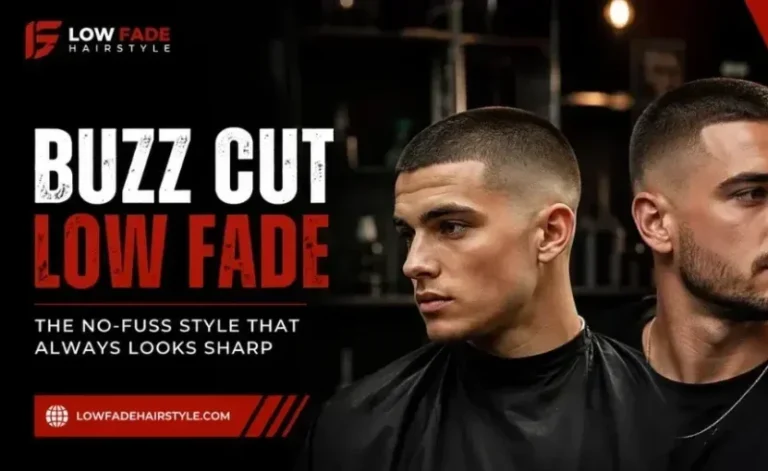
- Buzz cut with low fade — low maintenance, clean finish
- Low fade mullet or modern mullet low fade
- Low fade man bun — longer top with tight sides
- Low fade with beard — pairs naturally with shaped beard styles
- Low fade faux hawk or low fade fohawk
- Low fade with waves or 360 waves low fade
- Low fade blowout — voluminous top, sharp sides
Which One Is Right for Your Hair Type?
Straight hair: Both cuts work well. A taper gives a classic, polished look. A low fade for straight hair with a slick back or side part adds a sharper, more modern edge.
Curly hair: The low fade for curly hair is the superior choice — the defined contrast highlights the curl pattern on top. A curly low fade haircut or curly hair low fade taper is a top request for men with type 2, 3, and 4c hair.
Wavy hair: A low fade wavy hairstyle works beautifully, letting natural movement on top contrast with clean sides. A taper also suits wavy hair for a softer finish.
Thin or thinning hair: A taper is often recommended for thin hair because its gradual blend avoids harsh contrast that draws attention to the scalp. A very subtle low fade for thin hair can work if the top length is maintained.
Thick hair: Both work. A low fade controls bulk on the sides effectively, especially in combination with a textured top or textured fringe.
How to Ask Your Barber for the Right Cut
This is where many men go wrong. Here’s exactly what to say:
For a taper: “I’d like a taper on the sides and back — keep it off the skin, blend down to about a 1 or 2 guard at the nape, and leave the top at [your desired length].”
For a low fade: “I’d like a low fade — start the fade just above my ear, blend it down to a 0 or 0.5 at the base, and [describe your top style].”
For a low taper fade: “I want a low taper fade — start low, keep it tight but not to the skin, and leave a soft finish at the nape.”
If you want a low fade with a line up, a low fade with design, or a low fade V shape at the back, mention those specifically and show a reference photo. A good barber will execute exactly what you describe — but they need the right information to do it.
Frequently Asked Questions
Q1: What is the difference between a low fade and a taper fade?
A taper gradually reduces hair length but never reaches the skin, while a low fade blends much shorter—often to a 0 or 0.5 guard—for a sharper, more defined contrast. Both start at similar points on the head, but the low fade produces a cleaner, more modern finish.
Q2: Is a low taper the same as a low fade?
Not exactly — a low taper starts at the same low position but blends to a slightly longer length at the base, keeping a soft finish rather than going to bare skin. Think of it as a middle ground: more defined than a classic taper but less aggressive than a full low skin fade.
Q3: Where does a low fade start compared to a taper?
Both begin just above the ear and nape, but a low fade blends down aggressively to a 0–0.5 guard, while a taper stays at a 1–3 guard for a more natural, conservative look. The starting point is similar — the depth of the blend is what separates them.
Q4: Which is better for curly hair — a low fade or a taper?
A low fade for curly hair is the stronger choice, as the defined contrast highlights the natural curl pattern on top beautifully. A curly low fade haircut works especially well for Type 3 and 4c hair, giving shape and structure without flattening the texture.
Q5: Which lasts longer between cuts — a low fade or a taper?
A taper grows out more gracefully and can stay neat for 4–6 weeks, making it ideal for low-maintenance routines. A low fade needs a touch-up every 2–3 weeks to keep the blend sharp and the contrast clean.
Q6: What hairstyles pair best with a low fade vs a taper?
Low fades suit modern styles like the French crop low fade, slick back low fade, comb over with low fade, textured top, mullet, and buzz cut with low fade. Tapers work best with classic cuts — crew cuts, side parts, ivy league, caesar cuts, and military haircuts.
Q7: How do I ask my barber for a low fade instead of a taper?
Tell your barber: “I want a low fade — start just above my ear, blend down to a 0 or 0.5 at the base, and keep the top at [your length].” Showing a reference photo alongside this description guarantees you get the right cut every time.
Q8: Is a low fade or taper better for straight hair?
Both work well on straight hair, but a low fade for straight hair delivers a sharper, more modern edge—especially when paired with a slick back, side part, or textured fringe. A taper suits straight hair that needs a softer, more professional finish with less defined contrast.
Conclusion
Choose a taper for a classic, low-maintenance cut that stays neat for weeks and suits professional environments with a soft, natural finish. Choose a low fade for a sharper, more defined look that pairs perfectly with a textured top, curly hair, a beard, or any modern style from a French crop to a mullet.
Choose a low taper fade if you want the best of both worlds — more defined than a taper, but less aggressive than a full skin fade. All three are timeless, barbershop-proven cuts; knowing the difference is what gets you the haircut you actually want.