Low Fade Haircut: Everything You Need to Know
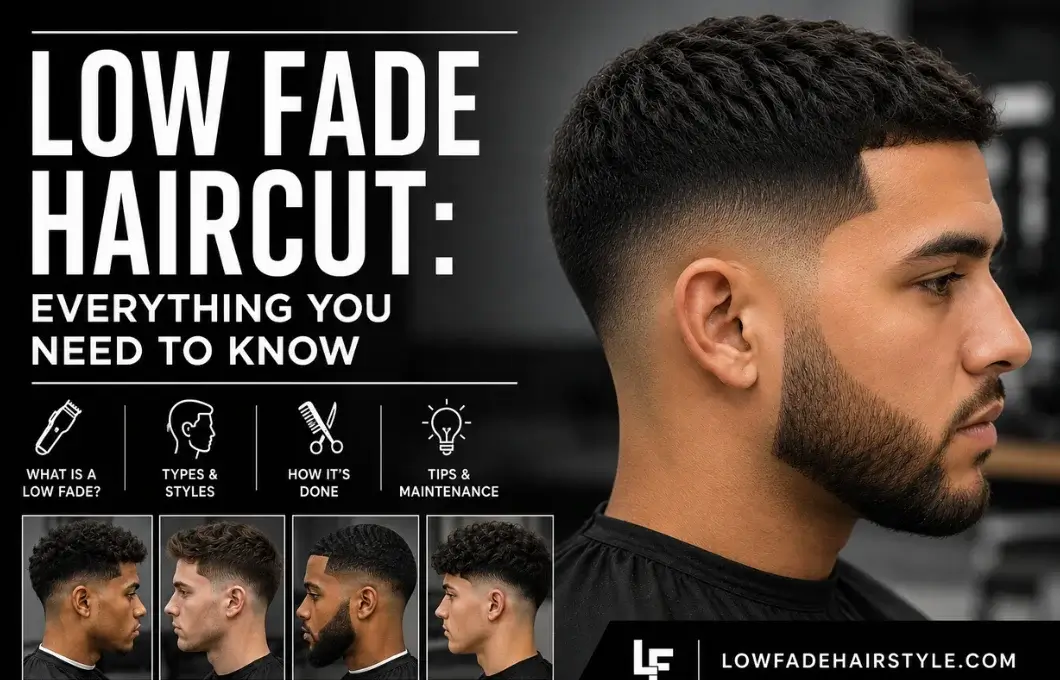
If there’s one haircut that has dominated barbershop conversations in recent years, it’s the low fade haircut. Clean, versatile, and universally flattering, the low fade has become a go-to choice for men across every age group, hair type, and personal style. Whether you’re sporting curly hair, straight hair, long hair on top, or anything in between, the low fade works — and works beautifully.
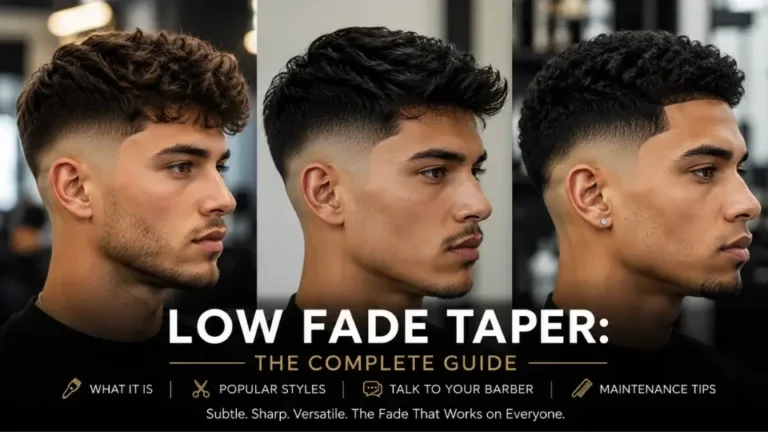
This complete guide covers everything you need to know: what a low fade is, how it differs from other fades, which styles pair best with it, how to ask for it at the barber, and how to maintain it at home.
What Is a Low Fade Haircut?
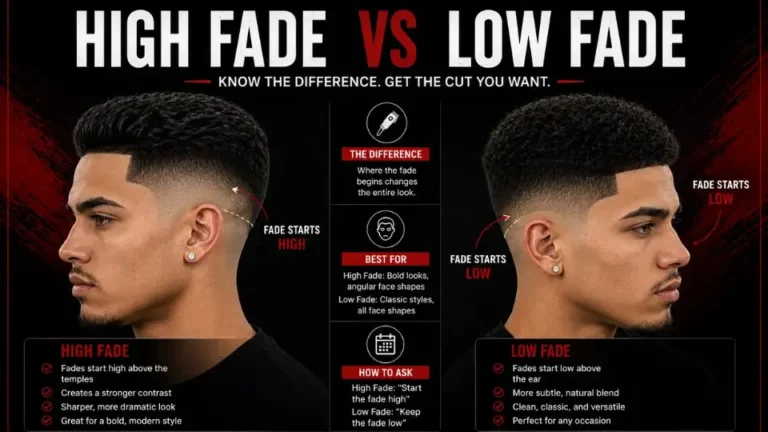
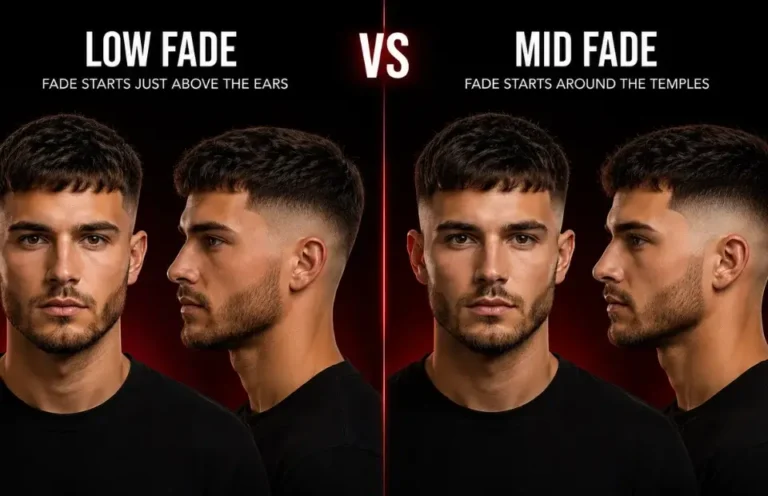
A low fade is a type of taper in which the hair gradually blends from a shorter length on the sides and back down toward the skin, starting low on the head—typically just above the ear and the nape of the neck. Unlike a high fade (which starts near the temples) or a mid fade (which begins around the midpoint of the head), the low fade is subtle and controlled.
The defining characteristic is where the fade begins. The low fade starts at roughly the first inch or two above the ear, keeping more hair on the sides while still achieving a sharp, polished transition. This makes it one of the most professional and clean-cut options available, equally at home in a boardroom or a weekend setting.
Common Variations of the Low Fade Haircut:
- Low skin fade — blends all the way down to bare skin (zero)
- Low taper fade — a gradual blend that maintains a slight length even at the lowest point
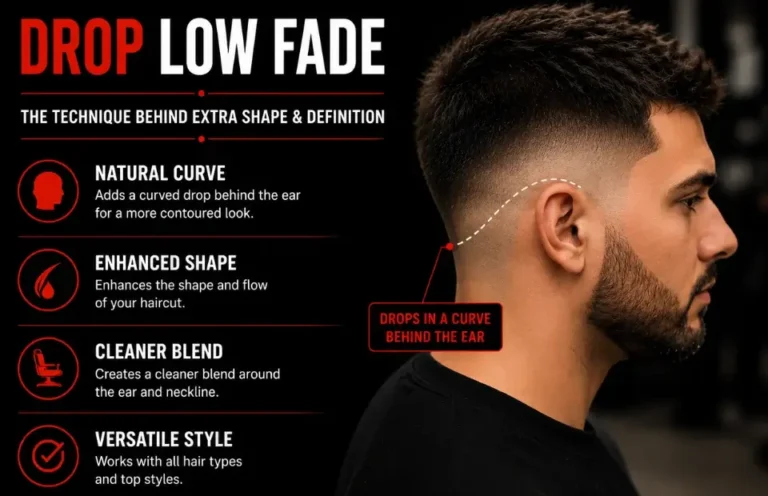
- Drop low fade—the fade line curves down behind the ear for a more stylized arc
- Bald low fade — a clean shave at the sides, starting low on the head
Low Fade Haircut vs Other Fade Types
Understanding how the low fade compares helps you choose what’s right for you.
Low Fade vs High Fade
The high fade starts much higher on the head, near the temples, giving a dramatic contrast. The low fade is more conservative, keeping more hair on the sides for a subtler look. If you want something office-appropriate and understated, go low. If you’re after a bold, edgy statement, go high.
Low Fade vs Mid Fade
The mid fade splits the difference, beginning midway up the sides. It offers more contrast than a low fade but isn’t as aggressive as a high. Many men find the mid-fade works well with textured crops and quiffs. The low fade tends to complement longer tops and more classic styles.
Low Fade vs Taper
A taper is a gradual length reduction that doesn’t necessarily reach the skin. A fade, by contrast, typically blends down to much shorter lengths—often a 0 or 0.5 guard. A low fade taper combines both principles: a tapered silhouette with a fade-style blend at the base.
Low Fade vs Drop Fade
The drop fade features a curved fade line that dips low behind the ear before coming back up, adding a modern design element. It’s a stylized version of the standard low fade.
Best Low Fade Haircut Styles
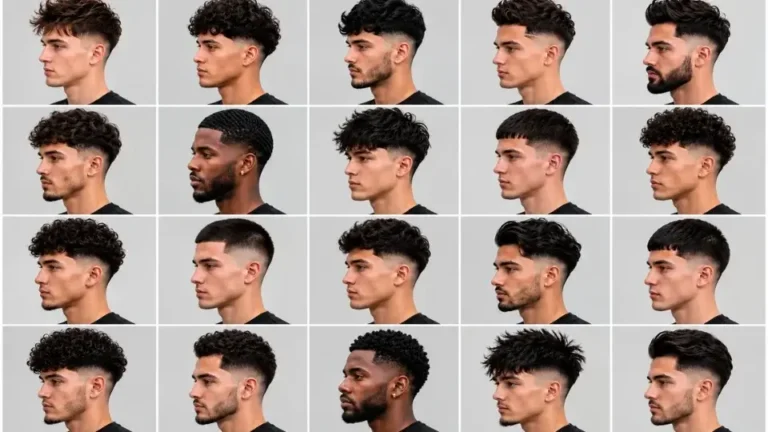
One of the strongest selling points of the low fade is how well it pairs with virtually every top style.
Low Fade with Textured Top
The most popular combination. A low fade with textured fringe or textured crop gives a modern, effortless finish. The textured top adds volume and movement while the low fade keeps the sides clean and structured. A textured crew cut low fade is ideal for men who want low-maintenance styling with a sharp edge.
Low Fade with Curly Hair
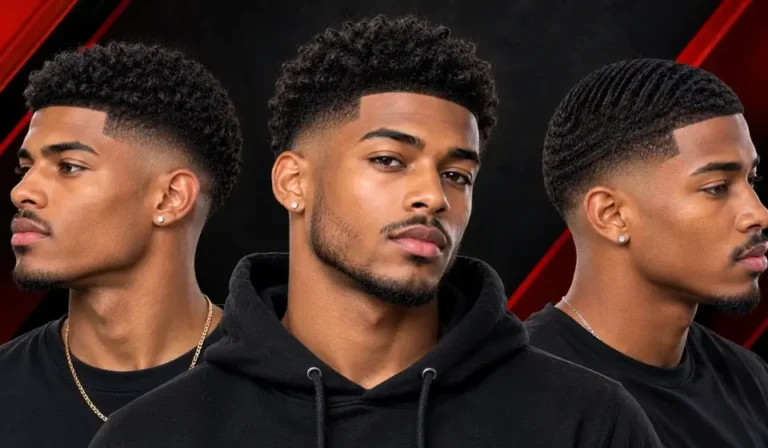
Men with curly hair absolutely thrive with a low fade. The fade defines the shape while letting the natural curl pattern on top take center stage. A curly top low fade or curly low fade haircut with some product gives a controlled yet energetic look. For 4c hair or tighter coil patterns, the low fade is especially popular, as it highlights natural texture.
Comb-over with Low Fade
The comb-over with a low fade is a timeless combo that bridges classic and contemporary. The hair on top is swept to one side, and the low fade on the sides creates a seamless, sharp finish. Works brilliantly for professional settings.
Low Fade with Long Hair on Top
Contrary to what some assume, the low fade pairs well with longer lengths on top. A long top low fade—whether it’s a low fade man bun, a slick back low fade, or a low fade with messy hair—creates an intentional contrast between volume above and precision below.
Low Fade Mullet
The low fade mullet has made an undeniable comeback. Keeping the sides tight with a low fade while letting the back grow out balances retro charm with modern grooming discipline. A modern mullet low fade, or low fade modern mullet, is one of the trendiest cuts for 2025–2026.
Buzz Cut with Low Fade
The buzz cut with low fade (or low fade buzz cut) offers the ultimate in low-maintenance style. It’s clean, fast to maintain, and incredibly masculine. An 8 guard buzz cut low fade or a long low fade buzz cut are popular requests that give a structured silhouette with minimal fuss.
Low Fade with Beard
Pairing a low fade with beard is a classic combination. The fade creates a natural transition zone between hairline and beard, making both features look intentional. A low fade haircut beard setup works especially well when the beard is shaped by a skilled barber to blend smoothly with the fade line.
French Crop with Low Fade
The French crop low fade — or low fade French crop — is one of the decade’s defining looks. A blunt fringe on a textured crop, paired with a clean low fade, is minimal, European, and endlessly adaptable.
How to Ask for a Low Fade Haircut at the Barber
Communication is everything in the barber’s chair. Here’s how to get the exact cut you want:
- Specify the fade height: Say “low fade” and point just above your ear to confirm placement.
- Mention the guard number: Common requests include a low fade 5 on top, low fade 3 on top, or low fade 2 on top—these refer to the clipper guard length on the top section.
- Describe the sides: Ask for a low skin fade if you want it blended to bare skin, or a low taper fade for a softer finish.
- Reference the top style: Show a photo if needed. Mention whether you want a low fade with textured top, a comb over, a fringe, or something else.
- Mention design elements: If you want a low fade with design or a low fade V shape at the back, point it out specifically.
How to Style and Maintain a Low Fade Haircut
After your cut, maintaining the shape and styling the top correctly will keep your look sharp between appointments.
Styling products to know:
- Matte clay or paste — ideal for a low fade textured top or messy fringe
- Pomade — best for slick back low fade or comb over styles
- Sea salt spray — great for low fade wavy hair or adding texture to straight hair
Maintenance Tips of Low Fade Haircut:
- Schedule touch-up appointments every 2–3 weeks to keep the fade clean
- Use a quality shampoo and conditioner suited to your hair type
- For low fade curly hair, use a curl-defining cream or gel to enhance natural texture on top
- For low fade straight hair, a lightweight volumizer helps the top hold its shape
Who Is the Low Fade Haircut Best For?
The short answer: almost everyone. The low fade suits all hair types—straight, wavy, curly, and coily—and works across face shapes. It’s particularly flattering for the following:
- Oval and square faces — the structured sides complement angular or symmetrical features
- Round faces—extra length on top combined with a low fade elongates the face
- Men who want a professional look — the subtlety of the low placement reads clean without being overly bold
Whether you’re searching for a men’s low fade haircut for the first time or refining a look you’ve worn for years, the low fade remains one of the most versatile, stylish, and timeless options in men’s grooming today.
Frequently Asked Questions
Q1: What is a low fade haircut?
A low fade haircut gradually blends the sides and back down toward the skin, starting just above the ear. It’s a clean, versatile cut that suits all hair types and styles.
Q2: Where does a low fade start on the head?
A low fade starts roughly one to two finger-widths above the ear, low on the sides and nape. This lower starting point is what separates it from a mid fade or high fade.
Q3: What is the difference between a low fade and a taper?
A taper gradually reduces length but never blends to skin, while a low fade goes much shorter — often to a 0 or 0.5 guard. All fades are tapers, but not all tapers are fades.
Q4: What is the difference between a low fade and a high fade?
A high fade starts near the temples for a bold, dramatic contrast, while a low fade begins above the ear for a subtle, professional look. Choose low fade for refinement, high fade for impact.
Q5: What is the difference between a low fade and a mid fade?
A mid fade starts at the midpoint of the sides, offering moderate contrast, while a low fade begins lower for a cleaner, more conservative finish. Low fades suit longer tops; mid fades suit textured crops and quiffs.
Q6: Who should get a low fade — and what hair types does it suit?
The low fade works for virtually every man — straight hair, curly hair, wavy hair, 4c hair, short or long on top. It’s especially flattering for professional settings and round or oval face shapes.
Q7: How do you style a low fade haircut at home?
Use matte clay for a textured top, pomade for a slick back or comb over, and curl cream for curly hair styles. Visit your barber every 2–3 weeks to keep the fade sharp and clean.
Q8: Is a low fade the same as a low taper fade?
They start at the same point on the head but differ in intensity—a low fade blends closer to skin, while a low taper keeps a slightly softer finish. Both terms are often used interchangeably at the barber.
Final Thoughts
The low fade haircut is more than a trend—it’s a foundational men’s style that adapts to whatever top you’re working with. From the low fade taper to the modern mullet low fade, from curly hair low fade styles to the clean buzz cut with low fade, this haircut continues to evolve while staying rooted in clean, sharp, confident grooming.
Ready to try one? Show your barber this guide, pick a style that suits your personality, and step out looking your best.