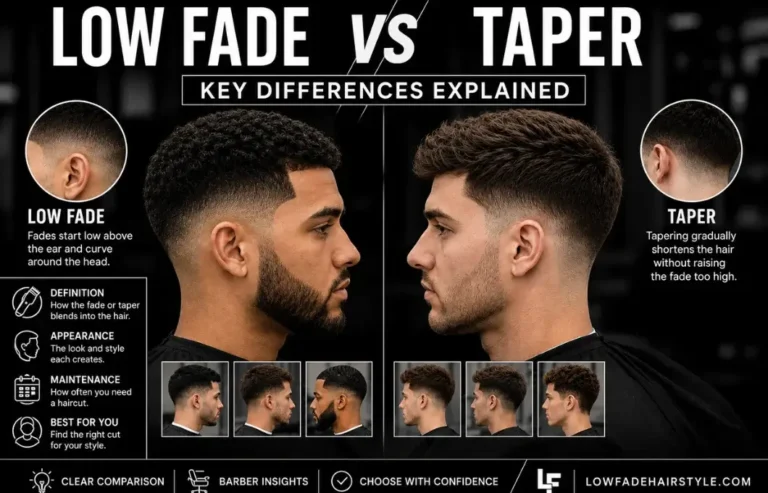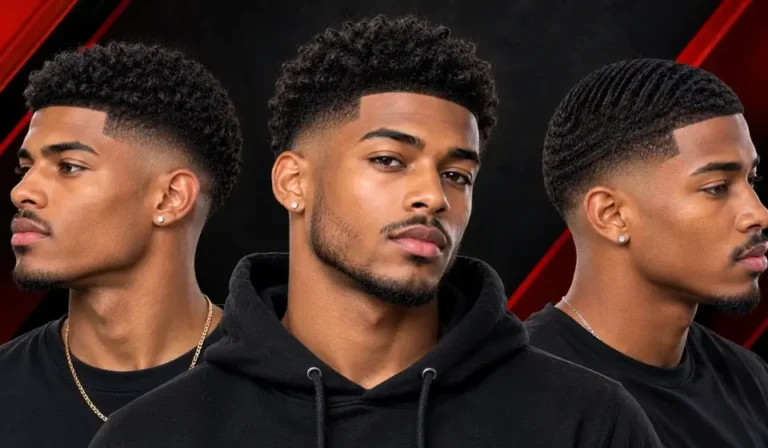
Low Fade Haircut for Men: Styles, Tips & How to Ask Your Barber
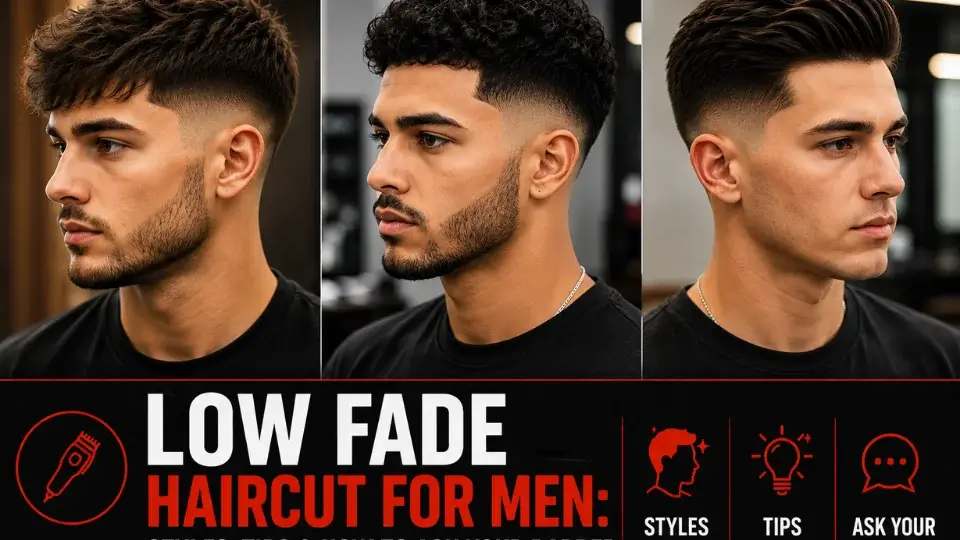
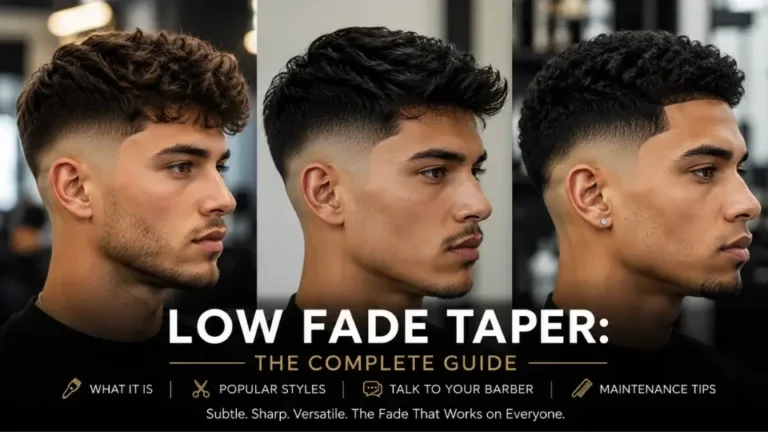
Choosing the right low fade haircut for men is easier when you know what suits your hair type, face shape, and lifestyle. Instead of guessing at the barbershop, learn how to choose the best low fade style, understand guard numbers, and communicate clearly with your barber.
This practical guide covers popular low fade variations, curl-specific advice, maintenance tips, and an easy barber script so you can leave the chair with the exact haircut you wanted.
Quick Style Matcher: Which Low Fade Fits Your Situation
Instead of scrolling through fifty options, start here. Pick the scenario closest to yours.
You have a job interview or big event in 48 hours
Go conservative: a low fade with a #3 guard on the sides blending into a 5 on top. It reads clean and professional without looking freshly buzzed.
You’re growing your hair out and don’t want to start over
Ask for a low fade taper cut instead of a skin fade—the sides stay slightly longer (a 6 on top to 8 on top range) so the grow-out phase looks intentional rather than patchy.
You have curly or coily hair and want low maintenance
A low skin fade with a 4c hair top keeps its shape without daily styling—the fade does the work, not the product.
You want something bold for a night out or a shoot
A low burst fade, or a low fade with a design, gives you contrast and personality without a full head change.
You just want a reliable, no-drama everyday cut
A 2 on top to 4 on top low fade with a soft blend is the safest, easiest-to-maintain combination barbers default to when a client says, “Surprise me, but keep it simple.”
You’re dealing with a receding hairline & want the fade to distract from it
Keep the top slightly longer — a 6 on top — and ask for the fade to stay low and soft rather than sharp, since a hard contrast line can actually draw more attention to the hairline, not less.
You currently have a mid or high fade and want to switch
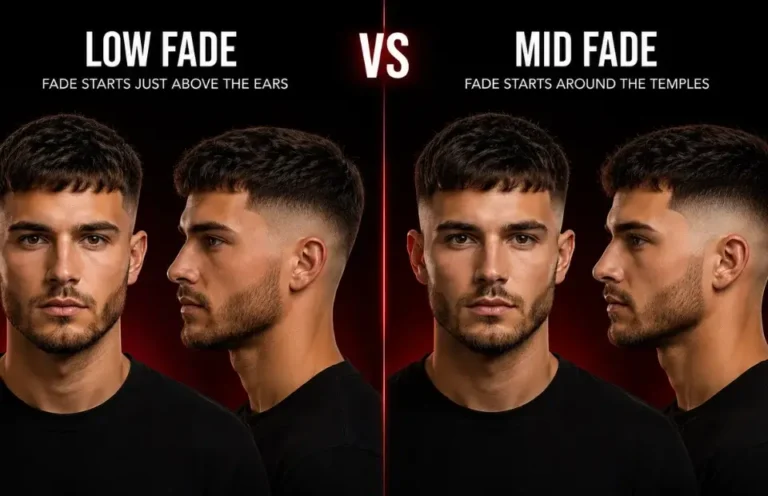
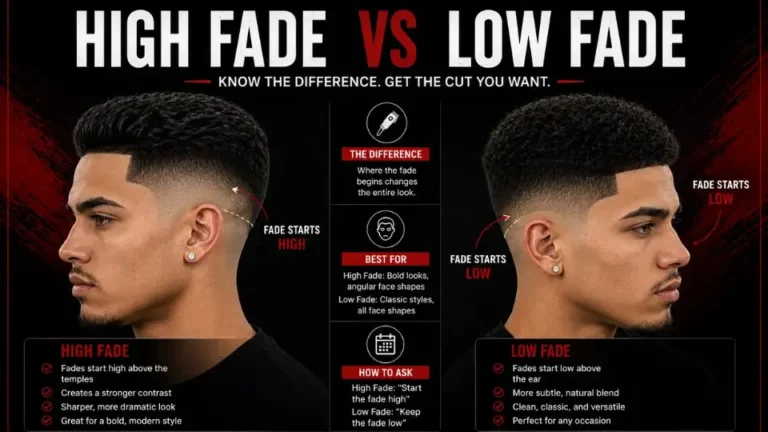
Tell your barber directly: “I want to bring the fade down — start it low, just above the ears, instead of at the temple.” It usually takes one or two visits for the higher fade to fully grow into a clean low line.
Medium Low Fade: The In-Between Option
If a full skin fade feels too aggressive but a taper feels too subtle, ask for a medium low fade—the sides are shortened noticeably but never taken down to bare skin. It’s a good middle ground for guys who want definition without the stark, high-contrast look of a bald fade.
The Guard-Number Cheat Sheet: Matching Top Length to Guard Size
Barbers think in guard numbers, not adjectives like “short” or “medium.” Knowing this vocabulary is the single fastest way to get an accurate cut.
|
Guard on top |
Approx. length |
Best for |
|
2 on top |
~1/4 inch |
Ultra low-maintenance business settings |
|
3 on top |
~3/8 inch |
Clean but slightly textured |
|
4 on top |
~1/2 inch |
Balanced, versatile everyday cut |
|
5 on top |
~5/8 inch |
Enough length for light styling |
|
6 on top |
~3/4 inch |
Textured crops, light quiffs |
|
7 on top |
~1 inch |
Longer, styled looks, grow-out phase |
For the sides themselves, most barbers work with a 1 on the sides to a 2 on the sides starting point near the bottom of the fade, occasionally dropping to a 0.5 or skin finish for a sharper contrast.
If you want the blend itself to look less aggressive, ask for a 70/30 split rather than an 80/20—it simply means less hair is removed relative to what’s kept, so the transition looks softer.
|
Guard on sides |
Look |
|
0 on sides |
Bare skin, sharpest contrast |
|
0.5 on sides |
Barely-there stubble, near-skin |
|
1 on sides |
Short but visible, easiest to grow out evenly |
|
1.5–2 on sides |
Softer fade, less stark against the top |
|
3 on sides |
Subtle blend, closer to a taper than a true fade |
A quick way to think about it: moving from a 1 to 2 on the sides softens the whole cut noticeably, while staying at 0 to 1 keeps that sharp, high-contrast fade line barbers often show off in portfolio photos.
Matching the Cut to Your Curl Pattern
Curl typing isn’t just a hairstylist buzzword—it genuinely changes how a low fade should be cut and styled.
2B and 2C waves hold a low fade taper especially well because the natural wave adds texture on top without extra product.
3A and 3B curls look best when the barber leaves slightly more length (a 6-to-8 range) so the curl pattern has room to show instead of getting cut into frizz.
3C hair benefits from a slightly looser fade line, since tighter curl patterns can make a razor-sharp edge look blurred within days.
4A hair pairs naturally with a low fade because the coil structure holds its shape at almost any top length, from a close crop to a rounded high top.
Telling your barber your curl type up front — even just “I’ve got 3B curls” — saves a lot of back-and-forth and helps them choose the right guard and cutting angle from the start.
Exactly What to Say to Your Barber
Skip vague requests. Use this script, adjusted to your preference:
State the fade location: “I want a low fade—start it just above my ears, not at the temples.”
Give a guard number for the top: “Keep the top at a 5, don’t take it shorter.”
Specify the blend style: “I want a soft, gradual blend, not a hard line” (or the opposite, if you want sharp contrast).
Mention your hair type: “My hair is 3B curly, so please don’t cut it too short or it’ll frizz.”
Bring a photo. A reference image resolves more miscommunication than any verbal description can.
If you’re unsure how to phrase it, this single sentence works almost every time when talking to a low fade barber: “Low fade, guard [your number] on top, start the fade just above the ear, blend it soft.”
Common Communication Mistakes That Ruin a Low Fade
Saying “just a trim” and expecting a fade. A fade is a distinct technique, not a length adjustment. Say the word “fade” explicitly.
Not specifying where the fade starts. “Low,” “mid,” and “high” all mean different things — confirm “just above the ears” so there’s no ambiguity.
Skipping the guard number. Adjectives are subjective; numbers aren’t. Always anchor the conversation to a guard size.
Forgetting to mention a beard. If you want the beard blended into the fade, say so before the clippers come out — it’s much harder to fix after the fact.
How Much Should a Low Fade Cost, and How Long Does It Last?
Pricing varies widely by city and barbershop tier, but a standard low fade typically falls in line with any other men’s haircut at a given shop—expect to pay more at a specialty barbershop than a walk-in chain and expect a modest premium for added detailing as a lineup or beard fade. The cut itself looks sharpest for about a week before the blend starts softening, which is why most clients book a touch-up every two to four weeks to keep the fade line crisp. If you’re on a tighter budget, ask specifically for a low fade over a skin fade—the skin fade needs more frequent touch-ups to stay clean, since regrowth shows fastest right at the bald line.
Quick FAQ
The following are the Frequently Asked Questions:
What’s a safeguard number for a first-time low fade?
A 4 or 5 on top with a #2 guard on the sides is a forgiving, easy-to-style starting point.
Can I ask for a low fade with a specific curl pattern in mind?
Yes—telling your barber your curl type (2B, 3A, 3C, 4A, etc.) helps them choose the right length and blending technique.
Is a low fade barber request different from a regular fade request?
Only where the fade begins. Say “low” clearly so it doesn’t start higher, at the temple, by mistake.
What if I don’t know any guard numbers at all?
Bring a photo and let your barber assign the numbers—just confirm out loud what they land on (“So that’s a 5 on top, 2 on the sides?”) so you both leave with the same expectation.
Does asking in Spanish change anything?
Not technically—a corte low fade follows the same guard logic as an English-language request. Barbers who work primarily in Spanish-speaking shops will recognize the same numbers and terms either way.
Final Word
The difference between a low fade you love and one you’re disappointed by usually comes down to communication, not the barber’s skill. Match the style to your situation, learn the guard numbers that apply to your hair, and use a clear, specific script at the chair—and you’ll walk out with the cut you actually asked for.