20 Best Low Fade Haircuts for Men in 2026
Most “best low fade” roundups rank styles by look alone—mullet, quiff, comb over, and so on. That’s useful, but it leaves out the one detail that actually determines whether you walk out of the shop happy: the exact number your barber clips onto that clipper.
This guide takes a different approach. Instead of naming looks, it ranks the 20 best low fade haircuts for men in 2026 by the specific guard number on top, the blend level on the sides, and the hair type or texture code each combination suits best. If you’ve ever sat in the chair and said “just a low fade, you know?” only to get something you didn’t want, this list gives you the exact language to use instead.
For general background on how a low fade haircut is structured or how it compares to a taper, a mid fade, or a high fade, check our other guides. This article assumes you already know what a low fade is and want to get specific about the number.
How Guard Numbers Work on Top of a Low Fade
A low fade is defined by where the blend starts on the sides—just above the ear. What sits on top of the head is a separate decision, and that’s where guard numbers come in.
Lower numbers (1–3) leave roughly 1/8 to 3/8 inch of hair—short, low-maintenance, close to a buzz.
Mid numbers (4–6) leave 1/2 to 3/4 inch—enough length to add texture or a light comb-through.
Higher numbers (7–8) leave 7/8 to 1 inch—enough to style with product, sweep, or add movement.
Pair any of these top lengths with a low fade on the sides, and you get a completely different haircut every time, even though the fade itself stays the same. Below are the 20 best combinations for 2026, ranked from lowest-maintenance to most styled.
The 20 Best Low Fade Haircuts for Men in 2026
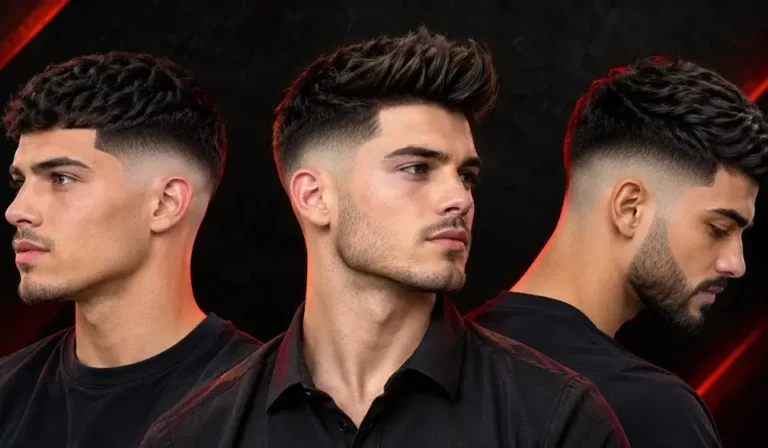
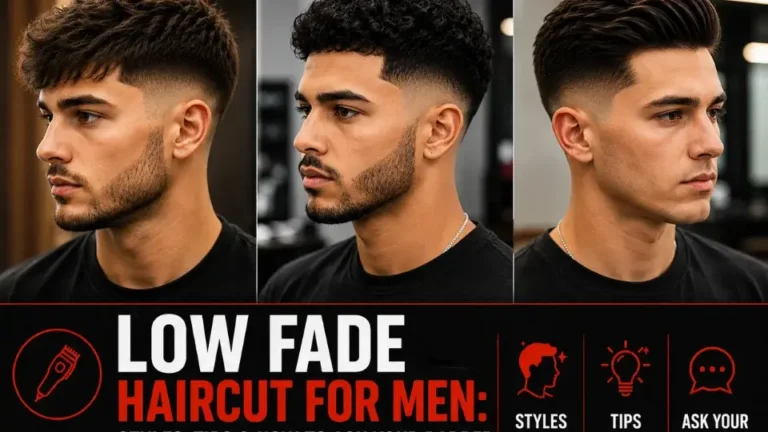
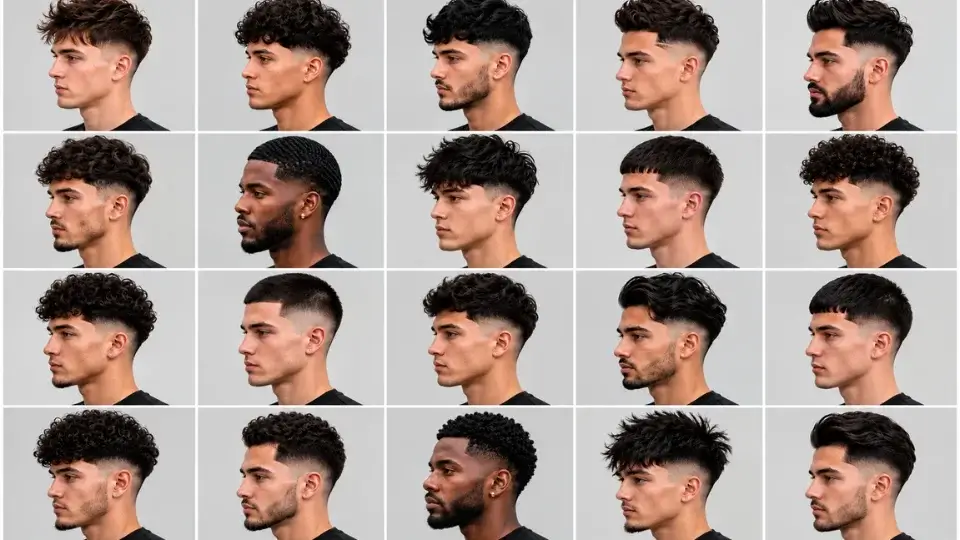
Here are the 20 best low fade haircuts for men in 2026 for all types of hair. You can easily select the right one for your hair.
1. Low Fade with a 2 on Top
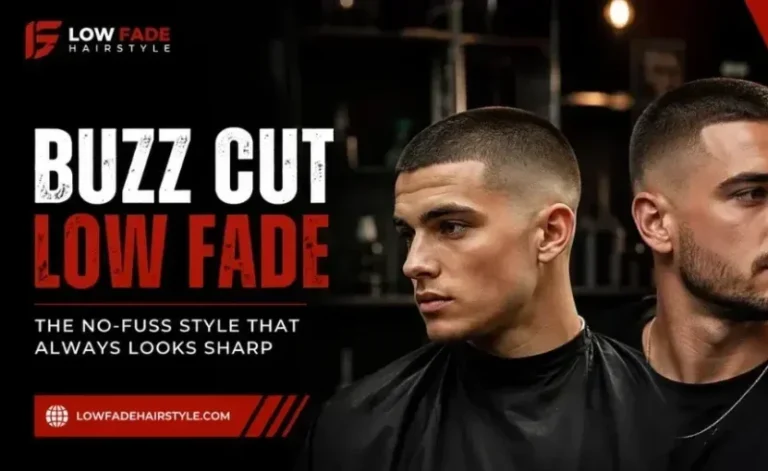
A 2 guard on top paired with a low fade on the sides is about as low-effort as a haircut gets. It reads clean and sharp straight out of the shower, no product required, and it’s the go-to request for guys who want a fresh look every day without touching a comb.
2. Low Fade with a 3 on Top
A 3 on top adds just enough length to catch a bit of texture without needing daily styling. It’s a favorite for guys transitioning out of a shorter cut who still want something wash-and-go on busy mornings.
3. Low Fade with a 4 on Top
The 4 on top is the middle ground between “barely there” and “actually styleable.” It holds a light matte product well and still grows out gracefully between visits, making it one of the more forgiving numbers on this list.
4. Low Fade with a 5 on Top
A 5 on top is one of the most requested combinations in barbershops right now, and it’s easy to see why—there’s enough length for a comb-over, a light quiff, or natural texture, but it never looks unkempt if you skip a day of styling.
5. Low Fade with a 6 on Top
Once you hit a 6 on top, you’ve got real styling range: slick back, side part, or textured crop are all in play. It suits guys who want to switch up their look day to day without committing to a fully long top.
6. Low Fade with a 7 on Top
A 7 guard leaves close to 7/8 inch, which is often used as a transition zone rather than a finished length—it’s the number barbers reach for when you’re growing your top out but still want the sides kept low and tight in the meantime.
7. Low Fade with an 8 on Top
The longest common guard number, an 8 on top, gives enough length for a proper pompadour, blowout, or brushed-back finish. Combined with a low fade, it keeps the overall silhouette from looking top-heavy.
8. Low Fade Blended to a 1
Below the guard numbers, “blended to a 1” describes the finish right at the bottom of the fade—the shortest non-skin setting, about 1/8 inch. Ask for this when you want the fade to look extremely tight without going fully bald at the neckline.
9. Low Fade Blended to a 2
A step up from a 1, blending into a 2 at the base, softens the contrast slightly while keeping the fade sharp. It’s a good middle-ground request if a full skin fade feels too stark for your face shape or workplace.
10. Low Fade to Skin
For maximum contrast, ask your barber to take the low fade all the way to skin at the very bottom before blending up. This is the cleanest, most defined version of a low fade and pairs especially well with any of the shorter guard numbers on top (2–4).
11. Low Fade for 1A/1B Straight Hair
Fine, straight hair (texture codes 1A and 1B) shows every line of a fade clearly, so a low fade on this hair type looks sharpest with a crisp guard transition—a 3 or 4 on top with a clean blend to a 1 on the sides holds its shape well between cuts.
12. Low Fade for 2B/2C Wavy Hair
Wavy hair (2B–2C) has natural movement that a low fade frames rather than fights. A 5 or 6 on top gives the waves room to show through, while the low fade keeps the sides from competing with the texture on top.
13. Low Fade for 3A/3B/3C Curly Hair
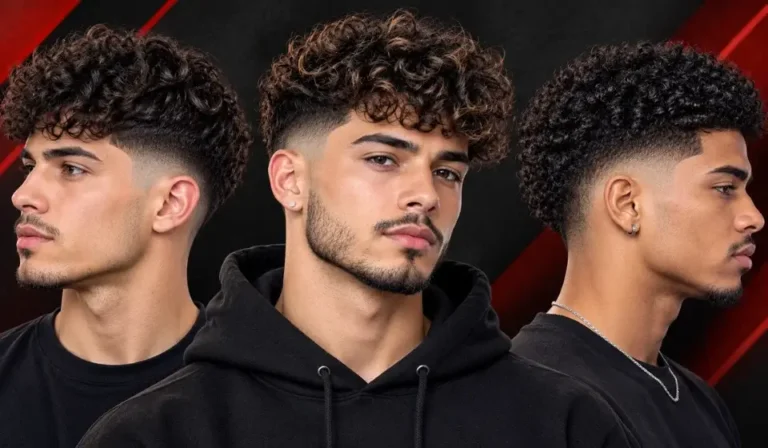
Curl types 3A through 3C hold their shape best with more length up top — think a 6, 7, or 8 guard — so the curl pattern has room to define itself, while the low fade on the sides keeps the overall shape controlled rather than bulky.
14. Low Fade for 4C Hair
4C hair is the tightest, most densely coiled texture, and it pairs powerfully with a low fade because the fade provides a crisp, defined edge that natural hair on top can grow into. This combination works whether you’re maintaining a shaped afro, a high-top style, or a shorter coil pattern.
15. Low Fade Black Male Style
Among Black men specifically, the low fade is one of the most requested base cuts in the barbershop, largely because it works as a foundation for waves, twists, high tops, and natural afros alike. The fade itself stays consistent; it’s the top styling—and the guard number chosen—that changes the whole look.
16. Low Fade Bajo
In Spanish-speaking barbershops, this exact style is often requested simply as a “low fade bajo” or “corte bajo con desvanecido”—the terminology differs, but the technique is identical: a fade that starts just above the ear rather than up near the temple. Knowing the term is useful if you’re bilingual or barbering in a Spanish-speaking shop.
17. Low Fade with 360 Waves
For guys chasing a deep 360-degree wave pattern, a low fade keeps the sides tight and out of the way so the waves stay the visual focus. This combination is typically maintained with a durag, a soft brush, and consistent brushing sessions rather than any particular product on the fade itself.
18. Low Fade 1 to 2 Blend
Asking for a “1 to 2 blend” tells your barber exactly how gradual you want the transition between guard lengths to be — a softer, more gradual step than jumping straight from a 1 to a 3. It’s a good specification to use if past fades have felt too abrupt or choppy.
19. Low Fade without a Beard
Not every low fade needs a beard pairing. Worn clean-shaven, a low fade puts the full focus on the jawline and the sharpness of the fade line itself, which is why it remains a popular choice for guys in client-facing or formal roles who prefer a fully clean look.
20. Low Fade 2026 Signature: The Custom Numbered Combo
The final entry isn’t a single style—it’s a method. Once you understand how guard numbers on top interact with blend levels on the sides, you can specify your own combination rather than relying on a photo alone. Telling your barber “a 5 on top, blended low, down to a 1 on the sides” is more precise than any single style name, and it’s quickly becoming the standard way barbers and clients communicate in 2026.
Why the Number Matters More Than the Style Name
Style names like “textured crop” or “comb over” describe the finished look, but they don’t tell a barber how much hair to actually remove—that’s what leads to the classic “this isn’t what I asked for” moment. A guard number is objective. A 5 is a 5 in any shop, in any city, on any hair type, even if the finished style looks different depending on how it’s brushed, blow-dried, or left natural. That’s the real reason this list is organized the way it is: names are subjective, numbers aren’t.
This also makes it easier to keep a consistent look as you move between barbers, travel, or switch shops. Instead of hoping a new barber interprets “low fade with some length on top” the same way your old one did, you can hand them two numbers and know almost exactly what you’ll get.
How to Choose Your Number
A quick way to narrow things down:
Want zero daily styling? Stay in the 2–4 range on top.
Want some styling flexibility without much effort? Go with a 5 or 6.
Want a pompadour, blowout, or slick back? Ask for a 7 or 8.
Want maximum contrast? Pair any of the above with a fade taken to skin.
Not sure yet? Start at a 5 on top—it’s the easiest number to adjust up or down at your next visit.
How to Ask Your Barber for These Numbers
Walk in with a specific sentence rather than a vague description. Something like: “Low fade, blended low on the sides, [your chosen number] on top.” If you want the base taken to the skin, say so directly. If you’re unsure how a number will look on your hair type, ask your barber which of the codes above (1A–4C) is closest to your texture—they’ll be able to tell you instantly and adjust the recommendation accordingly.
Keeping Your Numbered Combo Looking Sharp
Whatever combination you land on, the guard number on top will grow out faster than you expect—usually within two to three weeks—while the fade on the sides tends to soften even quicker. If you picked a low number (2–4), plan on a touch-up closer to the two-week mark to keep the low-maintenance look actually low-maintenance. Higher numbers (6–8) have more room to grow before the style loses its shape, so you can often stretch to three or four weeks between visits.
Write your combination down or save it on your phone so you’re not guessing at your next appointment: something like “5 on top, blended to a 2 on the sides” is all a new barber needs to recreate the exact cut, even without a photo.
Frequently Asked Questions
Here are the most common FAQs:
Where does a low fade start?
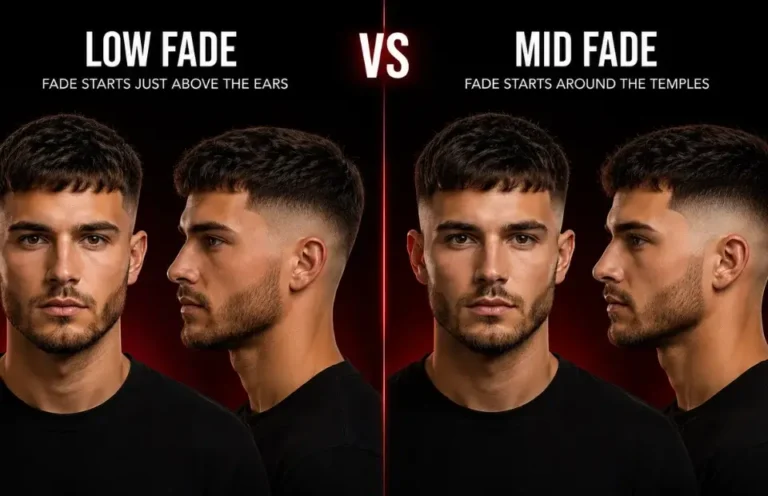
A low fade starts just above the ear, near the bottom of the head, which is what separates it from a mid or high fade that begins closer to the temple.
Is a low fade the same as a low taper fade?
Not quite — a low taper keeps more length throughout and never goes fully to skin, while a low fade includes a section blended down to skin or near-skin. Guard numbers on top can be identical between the two; the difference is in how far down the sides get cut.
What guard number should a first-timer ask for?
A 5 on top with a low fade blended to a 2 on the sides is a safe, adjustable starting point—enough length to style, without committing to anything drastic.
Did a specific song or meme start the “low taper fade” trend?
The phrase spread through barbershop humor and short-form video content rather than one single source, becoming shorthand for an overly specific haircut request rather than referencing any one creator.
Final Thoughts
The best low fade haircut for 2026 isn’t really a “style” at all—it’s a number, or really a combination of two numbers: one for the top, one for how low the sides get blended. Once you know your range, you can walk into any barbershop, anywhere, and get consistent results without relying on a reference photo every single time. Start with the combination closest to your current cut, adjust one number at a time, and you’ll land on your signature low fade faster than you’d think.